Robert Glasper Quotes
People don't know that the very reason the police were made was to oversee slaves; they would be called overseers, and if a slave got out of line or tried to break away and escape, these were the people to hold them in and bring them back.
Glasper, Robert. Interview. The FADER, 2015.


The slaves to which he is referring were the serfs of Slovakia who for hundreds of years had literally been the property of the Hungarian nobility. The problem however has been observed about any long-term slavery.


The Federal Fugitive Slave Act required all in free states to assist owners of escaped slaves to return them to their owners. In 1854 a Missouri slave owner tracked his escaped slave to Wisconsin and the Federal officials incarcerated the slave pending his return. A Wisconsin mob broke the slave out of jail and helped him escape to Canada. Booth was convicted under the Fugitive Slave Act for aiding the escape. Booth’s conviction was overturned by Wisconsin Supreme Court Judge Smith whose opinion overturned the Fugitive Slave Act on the grounds that it had usurped state’s rights. The Supreme Court overturned Smith’s ruling, but Booth was pardoned. See {587928}, {587927} & {587928}. State’s rights is a concept that we generally identify with Southern slave holding states to maintain slavery, but in this case, Wisconsin used the concept to fight slavery.


I should sooner remain in Southern bondage than avail myself of the opportunity of Northern freedom.
Hughes was a strong critic of the exploitation of laborers in the North by what he called the “bloated capitalist” First Irish Bishop in the United States

The time was the mid 18th Century.
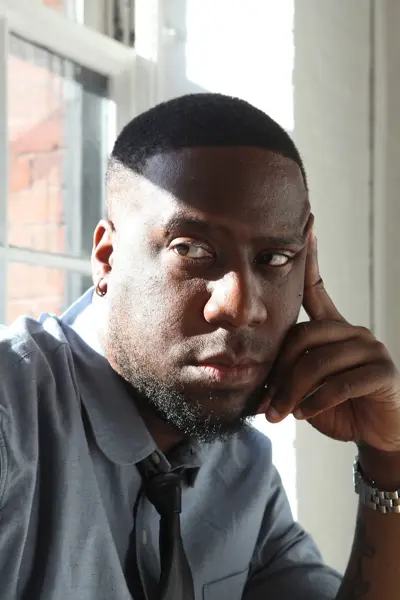
Robert Andre Glasper is an American pianist, record producer, songwriter and musical arranger with a career that bridges musical and artistic genres. To date, Glasper has won four Grammy Awards and received nine nominations across eight categories. He also won the 2017 Primetime Emmy Award for Outstanding Original Music and Lyrics for his song featured in Ava DuVernay’s critically hailed documentary, 13th, with Common and Karriem Riggins.
