George Carlin Quotes
People are wonderful. I love individuals. I hate groups of people. I hate a group of people with a 'common purpose'. 'Cause pretty soon they have little hats. And armbands. And fight songs. And a list of people they're going to visit at 3am. So, I dislike and despise groups of people but I love individuals. Every person you look at; you can see the universe in their eyes, if you're really looking.
Carlin, George, and Tony Hendra. Last Words. Free Press, 2009.


There are large areas of life and society in which all Arabs—especially in Saudi Arabia are expected to behave, believe, and think in certain ways. The modern Islamic religion governs behavior of all kinds and is very prescriptive. Everyone is expected to take it literally and behave accordingly. Individualism and even creativity except in prescribed areas is even regarded as sinful. Islam was not always such, and ironically when Christianity was in its Dark Ages and was even worse for the individual than Arab Islam today, the Muslims celebrated intellectual creativity and exploration of all ideas including those of the West. However, in the 12th century there was a “closing”—a narrowing of allowable Islamic thinking, and since then, Islamic people have had great difficulty with change or modernity. Not all Muslim nations are equally rigid but the Arabs are at the extreme among Islamic counties.

Spinoza was one of the most feared intellectuals in human history—feared that is by the established power structures. He is the only known person who was excommunicated by the Catholics, the Jews and the Muslims—all were forbidden to read his works. He was the enemy of authority and advocated personal reason as the guide for men.


This explains why demagogues usually choose scapegoats or politicians often turn subgroups against each other or find a dangerous enemy that all can hate.
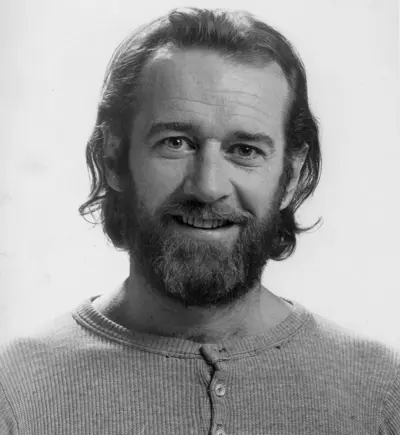
George Denis Patrick Carlin was an American stand-up comedian, actor, social critic, and author. Regarded as one of the most important and influential stand-up comics of all time, he was dubbed "the dean of counterculture comedians". He was known for his dark comedy and reflections on politics, the English language, psychology, religion, and taboo subjects. His "seven dirty words" routine was central to the 1978 United States Supreme Court case F.C.C. v. Pacifica Foundation, in which a 5–4 decision affirmed the government's power to censor indecent material on the public airwaves.
