Gulzar Quotes
Partition happened in my life but do you think I should be living in partition? I have seen it but as India has moved further and as a generation has moved further I am also moving further.

At Indian Independence from Britain, people could choose whether they wanted to be citizens of India or the new Muslim state created because many Muslims insisted on living in a country that was majority Muslim. However, and what came as a great shock to the then new Pakistani leadership, the majority of the Muslims of India choose not to become citizens of the new Islamic state and preferred to stay in Hindu dominated India which they knew would be democratic, free, and would protect their right to practice Islam as they saw fit. Many feared that in Pakistan Islamic extremists would dictate the exact form of Islam that Muslims must follow, and that is exactly what happened in Pakistan—not only from government action proscribing religious practice but from the government tolerating and not interfering with Islamic fundamentalist extremist terrorists who often assassinated Muslims whose particular form of worship was offensive to them or people would call for reforms of the protection of human rights.


This is another example of how President Roosevelt conducted his own international diplomacy independent of his own State Department. At the time, the U. S. State Department would not have any contact with Nehru who was in and out of British Indian jails for his anti-Colonial agitating. Roosevelt, however was a great admirer of Nehru and the Congress party and the commitment to democracy, freedom of religion, speech and the press and civil rights. Roosevelt and the American military strategic leaders were beginning to worry that China, even with help, would not be able to hold off the Japanese aggression, and India would become a frontier for the Allied war effort. The President realized that Nehru and his Congress Party were pressuring England for independence and extreme Indian nationalists were advocating non-support of the British military effort and strikes and protests to bog down the British army dealing with them instead of fighting the Japanese in Burma and elsewhere. There were a large number of Indian Brigades fighting for the British and if the Indian military volunteers were to be discouraged or boycotted, the allied war effort would suffer. So the President's style was to personally see what he could contribute over and above (and often to the distress of) his agencies established to do the job.

Churchill was reported to be so angry and exasperated that his face turned red and he was sputtering. During World War II, Gandhi, Nehru and other Indian Nationalists were leading protests against British control of India. This not only bogged down British soldiers surprising the nationalists rather than fighting in Burma or in other war theaters, but India supplied a huge number of battalions to the British Army the world over and if that manpower dried up, the allied war effort would suffer. The American State Department wanted Churchill to announce that after Japan was defeated, there would be a process toward self-government. This way, they thought, the Indians would redouble their effort to defeat the Japanese and stop the then current protests and strikes. Churchill was strongly opposed to any diminution of the British Empire, but beyond that, he knew India quite well and realized that at any hint of Independence the large Muslim minority in India would insist on autonomy or a partition of the country and use sectarian violence and terror to intimidate the Indian Congress party and the British, but the major victims of the terror—the Hindus and the Sikhs would not remain passive, but would retaliate in kind. President Roosevelt was in the midst of planning the Normandy Landings of the D-Day invasion and did not want to pressure Churchill and the British at this point in time, so the door to independence was not opened during the war and Britain had to deal with the protests throughout. However, when, after the war, the Labor Government, started a process toward Indian independence which resulted in exactly what Churchill predicted. At least 2 million Indians were slaughtered in the internecine terrorist cycles of fear and retaliation motivated terror attacks what were so extensive that the British military could not really control it.

At the time, the Muslim League did not even represent the majority of Muslims of India. . In a number of areas—Kashmir being the most notable—there were a majority of Muslims yet enough of them preferred to remain with India than be part of Pakistan as they were Islamic moderates and did not want to be part of a Muslim Pakistan that might pressure them or force them to a more rigid form of Islam. Also many valued democracy and religious freedom. Some doubted Pakistan's likelihood of thriving in its own and preferred the stability of India. Jinnah always claimed that Pakistan would allow complete freedom of religion, but once Pakistan was created Islamic fundamentalist pressure pushed it more and more to intolerance and religious persecution of other religions. By the 21st century, Pakistan had become one of the most intolerant nations on earth.

Singh turned him down. Note that even before Pakistan was a country, Jinnah and other Muslim leaders had hopes of grabbing much of India as the British partitioned it, and have been trying to do so ever since the inception of Pakistan

Two months earlier, Jinnah and the Muslim League had, behind the scenes, orchestrated and abetted vicious, murderous, terrorist attacks on Sikhs by Muslim tribesman brought into the Punjab for the purpose." Master Tara Singh

This famous quotation, from this important address, at such a critical time in history has been admired for years. Despite his great oratory, the next months were to see almost 2 million Indians of all faiths killed in what was probably the worst internecine violence in human history. Ironically, the politically motivated terrorism had stopped since all the decisions had been made. The motivation for the frightful atrocities that took place from then on was vengeance and fear of more vengeance." 1st Earl Mountbatten of Burma


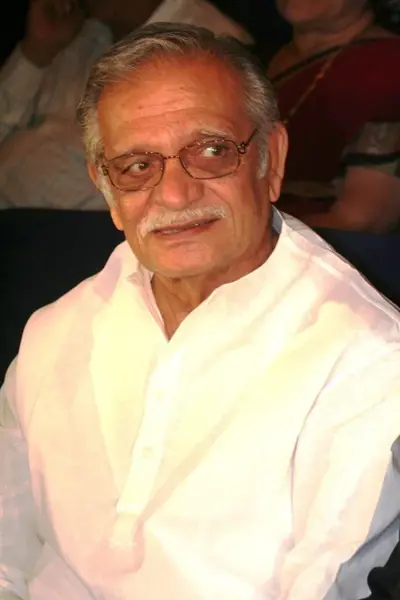
Sampooran Singh Kalra, known professionally as Gulzar or Gulzar Saab, is an Indian lyricist, poet, author, screenwriter, and film director. He started his career with music director S.D. Burman as a lyricist in the 1963 film Bandini and worked with many music directors including R. D. Burman, Salil Chowdhury, Vishal Bhardwaj and A. R. Rahman. He was awarded Padma Bhushan in 2004, the third-highest civilian award in India, the Sahitya Academy Award, and the Dadasaheb Phalke Award — the highest award in Indian cinema. He has won 5 several Indian National Film Awards, 22 Filmfare Awards, one Academy Award and one Grammy Award.
