Howard Metzenbaum Quotes
Parading around the nation as a squeaky clean, crime-fighting G-man, J. Edgar Hoover, we now know, thoroughly abused the powers of his office and completely trampled on the individual rights of thousands of patriotic, law-abiding citizens.
The Senator was introducing a bill to remove Hoover's name from the FBI building that had been named after him.
Howard M. Metzenbaum, U. S. Senator (Democrat, OH), Senate Speech, September 25, 1993
Sourced by: Eigen's Political and Historical Quotations


Leary was a strong advocate of the use of illicit drugs and stimulants. Yet he ignored all the side effects and negative health consequences of the processes and while he thought he was assisting people to enlarge their mental horizons, he irresponsibly and criminally damaged many permanently. His government “persecutors” themselves were also all disgraced by the extremes to which they went to prevent the counter-culture characterized by Leary and others. They became paramoid that the drug culture would morph into a protest culture against the administration. The tended to exxagerate the negative consequences of illicit drugs--especially marijuana. These exaggerations caused many people to believe Leary and others who went to the other extreme and underated the negative consequences of illicit drugs. It became a culture war when it should have been a medical problem.

After Harry Truman stated that certain civil rights protests were communist inspired in 1960, his former Secretary of State requested that he restrain himself on this subject. The allegations of a communist conspiracy had arisen from the FBI’s chief, J. Edgar Hoover.

The FBI was accused of tapping congressional phones and infiltrating college campuses:


Senator Church was the chairman of the committee. It’s reports (14 in all) are the most extensive documentation of U. S. intelligence ever compiled.


The agent, at J. Edgar Hoover’s instruction had approached the editor of Martin Luther King Jr.’s hometown newspaper and offered Patterson a photograph of King and a white woman in front of a motel with the “information” that King was having an affair with the woman. The agent suggested that the story was that the minster while pretending to respect Christian morality in his public persona was actually violating basic moral standards. Patterson, like any qualified editor would realize that the photograph proved nothing about an affair. There might have been other staff nearby who were not framed in the picture that the FBI agents had taken. There might have been a meeting to discuss civil rights strategy or something else. To Patterson it was unheard of that a Federal Official should try encourage a newspaper to slander an American citizen. Even if true, the Federal Role was astounding. Actually, this was a very common tactic of J. Edgar Hoover and not at all unusual. Also, although it is not known whether King was having any kind of affair with the woman in the picture, King was not a faithful husband from a sexual point of view. At the time, facts about extramarital sex were not printed about politicians and other political figures even if the journalists knew of them (as with John F. Kennedy’s many liaisons) unless they affected the person’s job or made them less effective. It is not known whether Patterson knew anything of King’s peccadillos but that kind of keyhole journalism was not practiced by serious newspapers at the time even if the pictures could be confirmed. That would be “keyhole journalism”—peeping through keyhole to invade the personal privacy of people.


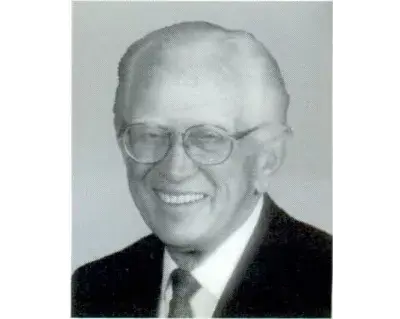
Howard Morton Metzenbaum was an American politician and businessman who served for almost 20 years as a Democratic member of the U.S. Senate from Ohio (1974, 1976–1995). He also served in the Ohio House of Representatives and Senate from 1943 to 1951.
