Dov Ber Borochov Quotes
Palestine’s twenty-seven thousand square kilometers can accommodate up to nine million people, whereas now it is even short of a half-million…. When the waste lands are prepared for colonization, when modern technique is introduced, and when the other obstacles are removed, there will be sufficient land to accommodate both the Jews and the Arabs. Normal relations between the Jews and Arabs will and must prevail.
Dov Ber Borochov, 1881-1917, Russian Marxist & Zionist, Speech, Kiev, September 1917
Sourced by: Eigen's Political and Historical Quotations

Because of the classic historical anti-Semitism and discrimination, Jews were barred from land ownership and as a result few were farmers or had agricultural experience in their families. They were tradesmen, artisans, professionals in Europe. So amongst Jews and non Jews alike the notion of Jews settling the land of Palestine and farming it or trapping, the way the Boers had in South Africa or the French in Canada, was not a very credible image. The Zionists, realizing this potential weakness, placed strong emphasis on agriculture, developed the agricultural kibbutz concept and encouraged Jews to become farmers. The effort was so successful that almost all the leading early Zionist immigrants to Palestine became farmers. When independence came to Israel, the Jewish agriculture was more productive than most of that in Europe and almost on a par with small farms in the United States. The Israelis were known for “making the desert bloom.


This quote is very important historically as it bears on the two different narratives of the creation of Israel given by the Jews and the Arabs. The Arabs claim that in the 1948 partition of Palestine, the Jew attacked the Arabs and drove them out of the areas in which they had lived for years, The Israelis claim that they urged the Arabs to stay and that all those who did, received full citizenship in the new state of Israel. The Arab leaders pressured and in some cases even forced the Arabs to leave so that the Arab armies could use artillery and other war weapons and not have to worry about hitting Arabs. They promised the Arabs who left that they could return in a few days when the Jews were defeated and pushed into the sea, and the Arabs could have the Jewish property. This report of an impartial actor, tends to support the Jewish view of the happening in so far as the behavior of the Jews was concerned. There was no pressure placed on Arabs by Jews to leave. It was actually, the reverse. There were however, two small rural areas where Jewish radicals did try and drive the Arabs out, but in general the Haifa experience was the norm.

This quotation has great historical significance for its logic and perception as much as for its content, The Jewish population that the British admitted plus those already in Israel was a small fraction of the Arab population then and a tiny proportion of the Jews and Arabs now inhabiting Israel with a very high standard of living. This included over 1 million Russian Jewish immigrants, The perception of the capacity of land to support a population has always been underestimated, The Arabs simply extrapolated assuming no modernization, no technology, and every family having a small farm. Given Arab traditional perceptions of societal development, modern Israel could not possibly function, much less thrive as it does. This is one of the reasons that the Arab nations have been so reluctant to absorb more Palestinian Arab refugees. A backward view of society and assumption that the Arab status quo was then the optimum society prohibited the Arabs from modern developmental possibilities.


David Ben-Gurion was the Zionist leader in Palestine and became the first Israeli Prime Minister. In 1948 the United Nations Partitioned Palestine into two states, one Jewish and one Arab. But over a dozen Arab Armies invaded the Jewish area to take it by force. They were repulsed by a much smaller, poorer armed, Zionist population of desperate Jews. In some areas Palestinian Arabs at the request of the outside Arab leaders attacked their Jewish neighbors and where they did or they had helped the Arab armies, the civilian population was ejected. Arab leaders and demagogues told Arab Civilians to go to the West Bank behind the front lines so that the Arab armor could advance unimpeded. They were told that they could return the following week after the victory. When the victory never came, the Israelis would not allow the Arabs to return and this was the origin of the Refugee problem. About the only thing that the Jewish and Arab leadership agreed upon was that the Arab civilian population should leave the front and go to the West Bank.

He was very critical of the early Zionist movement which he felt was only concerned with resettling Jews in Palestine rather than turning Palestine into a culturally Jewish nation. On this issue, he was tragically correct.


This statement hardened the Israeli population away from anything that would bring Hamas more power. The PLO leader had, for ALL the Palestinian people, recognized the right of Israel to exist {633062}. Now Hamas was not only reneging on the Arafat declaration, but also would not even use the term “Israel” and instead calls the nation which in less time than the Palestinians have had, has developed a modern, industrial, democratic state far in advance of the Palestinians or any of the Arab nations for that matter. Yet it is relegated to a “project” with the great hope of having it come to an end—the destruction of Israel. The Israelis observe that this is a de facto declaration of war, and hence treat Gaza and Hamas as an enemy force to be reckoned with. See {635338} for another alarming reneging of the recognition of Israel.

This view has had a profound influence on the attitudes and actions of many Israelis in dealing with Arab terrorism. “Proportionate” retaliation is only retaliation and perhaps vengeance, but this doctrine developed out of frustration that little else worked has in many subsequent occasions driven Israeli government defense policy. The Lebanese War of 2006 was perhaps the best illustration.

The UN peacekeepers have had a sorry record of protecting people from aggression, attacks and even genocide. In Sarajevo they stood by as the Serbs rounded up 7,000 male Muslims and marched them off to be executed right past the United Nations forces. And the UN was unable to stop the genocide in Rwanda. In the Middle East on several occasions, Arab armies have walked right through the United Nations peacekeepers and attacked Israeli civilians. So no one, lease of all the Israelis have any confidence that the United Nations can provide security in Jerusalem or anywhere else in the Middle East. The Israeli position was that when the Jordanians controlled the city, they did not allow Jews to their sacred places to pray or have access to the city. The UN could not prevent violence at all. No one else is willing, but since 1967 the Israelis have maintained the peace and security of the city while allowing the Arabs and other groups access to their places of worship.


At the time all the Arab armies were attacking Israel. Many Arabs joined the assault or evacuated to return with the “victorious” Arab armies. Many others stayed in Israel. The former became the refugees of the area. The latter, are citizens of Israel with the best health and education in the Middle East and the only Arabs who have the freedom of living in a democracy.

The very day of Israel’s birth, 14 Arab Armies attacked a badly outnumbered group of citizens with no formal army and few weapons. The reason the Mufti called on Arabs to leave was to allow the Arab heavy armor and artillery to be used without endangering Arab civilians. The Jews however had no place to go and were fighting for their very lives. Surprising the entire world, they not only beat back all the Arab Armies but won additional strategic positions. The Arabs who stayed became Israeli citizens and there are almost ½ million of them today. Those that left, were rejected by the Arab nations who started the war (except Jordan) and asked them to leave could not be distinguished from those Arabs who, even after the Israeli victory vowed to attack again. That is the origin of the Arab refugees. Since the other Arab states except Jordan would not assist their fellow Arabs, the only solution seems to be a Palestinian State on the West Bank and Gaza, but for that to happen war and terrorism would have to end and Israel would have to be accepted.

She was instrumental in forming the United Nations, but one of its weaknesses was and has been since that it was very difficult and cumbersome for the UN to mount a military force to defend a country or region against aggression. The situation has not improved much on that score since 1948. Israel had just been created by the United Nations, but over a dozen Arab State armies attacked the fledgling Jewish nation. The Israelis, against all odds, not only defended their territory but were able to seize key Arab military and strategic areas. Mrs. Roosevelt, and most of the world, assumed that under the circumstances, the Arabs would negotiate a peace treaty with Israel to regain their land. However, the Arab nations would not recognize the State of Israel and would not even negotiate with the Israelis. ER and most of the world was wrong. Instead, the Arab nations’ strategy was to have a cease fire and build their military strength to attack later in greater force. When that also failed and Israel won the subsequent wars, the Arabs then turned to Terrorism. 60 years later, the Israelis and the Arabs were further apart in many ways than in 1948.

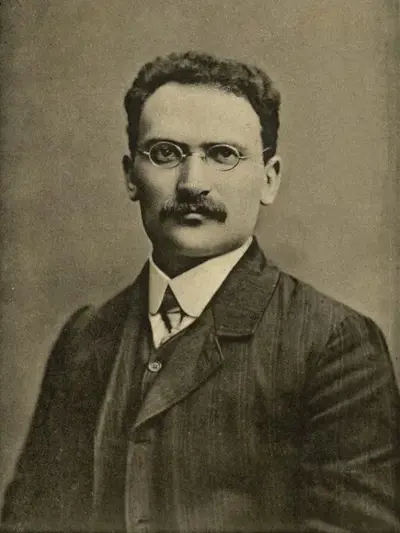
Dov Ber Borochov was a Marxist Zionist and one of the founders of the Labor Zionist movement. He was also a pioneer in the study of the Yiddish language.
