Lawrence Lessig Quotes
Overregulation stifles creativity. It smothers innovation. It gives dinosaurs a veto over the future.
Lawrence Lessig, Founder of Stanford University Center for Internet and Society, Founder and chairman of the Creative Commons, Free Culture, 2004
Sourced by: Eigen's Political and Historical Quotations


The last 5 years of the 1990s were the last of the Clinton administration where he was the principle architect of economic policies for that period. While this statement was somewhat self serving, the economic and fiscal performance of the Clinton years were astoundingly superior to those before and after.


Many of his greatest ideas were not sufficiently appreciated by many other scientists nor the businessmen who funded scientific projects then. Tesla was one of the great American immigrant scientists. He found in America the kind of intellectual and operational freedom that did not exist in the rigid, monarch-controlled, Austro-Hungarian Empire. He developed patents and techniques that formed the technological bases of radio, telephone long distance, TV, cell phones, Wi Fi, just to name a few. Most important he was Thomas Edison’s great nemesis. Edison invented DC electric generators that could power factories or entire streets in a neighborhood. Tesler invented and developed AC electrical technology which could power entire cities and he could move electricity over long distances which Edison could not. Tesler was one of the first scientists to conceive of and try to implement “Big Science” where there were huge capital investments to develop machines and systems to do what had never been done before—philosophically like the CERN Hadron Collider. Tesler even convinced a large corporation to finance the construction of a massive building and tower so he could experiment with the wireless transmission of electricity. However, as the industrial democracies have learned, Big Science can only be funded by governments and it often takes sever working in consort to afford the huge investment that is required. In Tesler’s era, the federal and state governments did not fund scientific research so his work was not only technically ahead of his time but also conceptually. He anticipated most of the problems and need for a national power grid that was challenging America even at the beginning of the 21st century.


He was referring to the institutions in the particular fields. An established institution in education like a university might develop an innovation in astronomy or language translation, but not likely develop significant innovations in education. An established computer programming company might innovate the method of warehousing and shipping merchandise, but they are not likely to develop an innovative way of computer programming. That is typically done by a programming non-established firm or individual. There are a number of exceptions and this is not put forth as a general principle, but as a statistical observation. Established institutions are working harder and smarter to find ways of innovating regularly, and may succeed more frequently than the present.


The impication is that small changes are just as hard often and might be easier than large changes.


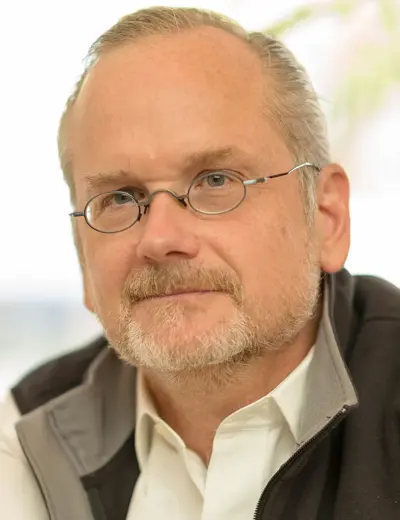
Lester Lawrence Lessig III is an American academic, attorney, and political activist. He is the Roy L. Furman Professor of Law at Harvard Law School and the former director of the Edmond J. Safra Center for Ethics at Harvard University. Lessig was a candidate for the Democratic Party's nomination for president of the United States in the 2016 U.S. presidential election, but withdrew before the primaries.
