Ernest Blythe Quotes
Our parliamentary democracy should be replaced. We should have a drastic limitation of the powers of parliament, and the creation of a voluntary disciplined public service organization.
He was very concerned about a democracy in Ireland where he was concerned that Parliament would not behave responsibly and also did not have the technical or professional skills to manage a state.
Ernest Blythe, 1889–1975, Minister for Finance, First Irish Free State Government, View on reorganizing the government, 1933
Sourced by: Eigen's Political and Historical Quotations


At the time, the House of Lords which was made up of aristocrats who inherited their titles and the Lords could undo any legislation that was passed by the House of Commons. This gave the aristocrats of England a veto on all legislation.


This quotation had a close proximity to Lincoln’s Gettysburg Address (see linked quote). Although this was probably Lincoln's most famous line, it was not totally original. John Adams came close in a 1774 proclamation (see linked quote). As did John Marshall in his McCulloch v. Maryland decision (see linked quote). There was also Thomas Cooper in 1795 (see linked quote). But the earliest close phrase use appears to be the English cleric, John Wycliffe, in 1382 (see linked quote). It is not known with which of these Lincoln was familiar.


This was his version of the governing body of a republican commonwealth. His assumption was that the ablest men would be the nobility, the educated and religious (Catholic) elite.


This is a very important quotation. Abraham Lincoln obtained a printed copy of Parker’s sermon and underlined this quotation on his copy. Later when he was President he used a slight variation of Parker’s last phrase in the last line of his famous Gettysburg Address.

Chief legal officer of a Dutch town. He wanted to have a plebiscite in each town on major issues before the assembly so as to instruct the representative as to how to vote. The graphic is a painting of Adriaan van Zeebergh and his board of the Teylers Stichting.


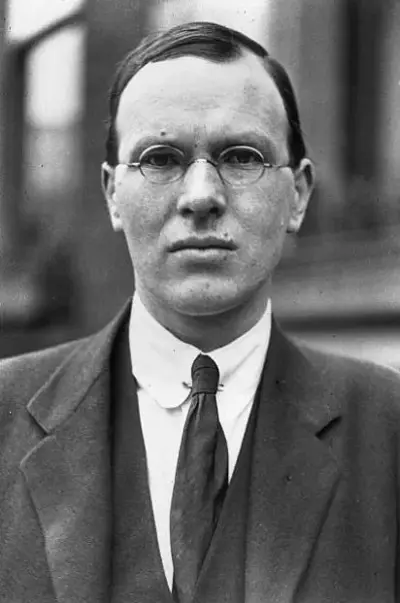
Ernest Blythe was an Irish journalist, managing director of the Abbey Theatre, and politician who served as Minister for Finance from 1923 to 1932, Minister for Posts and Telegraphs and Vice-President of the Executive Council from 1927 to 1932 and Minister for Local Government from 1922 to 1923. He was a Senator for the Labour Panel from 1934 to 1936. He served as a Teachta Dála (TD) for the Monaghan constituency from 1921 to 1933 and Member of Parliament (MP) for North Monaghan from 1918 to 1922.
