George Jacob Holyoake Quotes
Our National Church and general religious institutions cost us, upon accredited computation, about twenty million pounds annually. Worship thus being expensive, I appeal to your heads and your pockets whether we are not too poor to have a God. If poor men cost the State as much, they would be put like officers on half pay; and while our distress lasts, I think it would be wise to do the same thing with the deity.
This proposal was considered so dangerous to the established Anglican Church that Holyoake was charged with Blasphemy, tried, convicted and sentenced to 6 months in prison.
George Jacob Holyoake, 1817-1906, English reformer, Speech, “Home Colonization as a Means of Superseding the Poor Laws and Emigration,” Mechanics' Institute, London, May 24, 1842
Sourced by: Eigen's Political and Historical Quotations


The Barbary Pirates of Algiers, led and controlled by the Bey or Dey (king) had an incredible extortion racket going in the Mediterranean. If nations would pay them an annual sum each year, they would not attack and seize merchant ships of that country and sell the ships and goods while holding the sailors for ransom. The only thing that the Algerians seemed to be interested in was money and religion.


England had, under Henry VIII, left the Roman Catholic Church where the King replaced the Pope as head of the English Church. Henry’s successors then had to organize and manage the national Christian church. James was discussing the hierarchy of the Church of England and there was a suggestion that Bishops be eliminated and have every priest directly responsible to the crown. Bishops would be powerful figures who might form a power center. (They did later). However, King James I observed that the King is God’s choice and rules by divine right. So there had to be bishops to crown kings. The bishoprics were retained.
In Ireland at the time the established church—the Protestant Anglican Church of Ireland—had the legal right to collect annual Tithes from the population in order to fund the activities of the Church. One difficulty however, was that the majority of the population were Roman Catholics. The poorest of them could not afford the tithe payments to any church. Whereas in the past, the Protestant Church officials did not force the issue of tithe collection from the poor, in about 1830 they changed and seized the property of the poor (Protestants and Catholics) and auctioned it off to pay for the tithe. The Cardinal organized a campaign of non-violent civil disobedience to combat the Tithe. See {639227}.
The same ratio of religious establishments to those that serve or sell alcohol is often the same in the modern city as it was in 1913. This was alarming to many civic leaders—religious and otherwise. Calls for prohibition and regulations limiting saloon hours (especially on Sundays) were common.

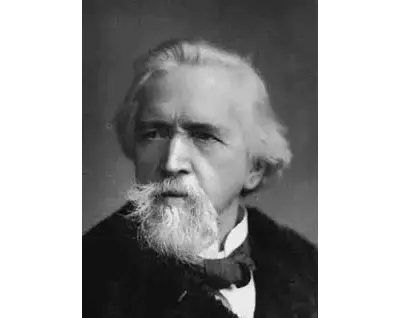
George Jacob Holyoake was an English secularist, co-operator, and newspaper editor. He coined the term "secularism" in 1851 and "jingoism" in 1878. He edited a secularist paper, the Reasoner, from 1846 to June 1861, and a cooperative paper, The English Leader, from 1864 to 1867.
