Peter Stuyvesant Quotes
Our little force will march on tomorrow or the day after.
Stuyvesant, Peter. "Letter to the Council, 1655." Documents Relative to the Colonial History of the State of New-York, edited by E. B. O'Callaghan, vol. 12, Weed, Parsons and Company, 1877, p. 98.


This is not the most common view military view which tends to place the senior officers out of harm’s way as they are “too valuable” to become casualties. Among modern armies, Israel stands out as having the same leadership doctrine as Genghis Khan. Those who attack Israel and lose, never have their commanders at the front of the battle. Israel does.


This quotation is often used to illustrate the "Muslim propensity to violence". However, the context of the quotation was a historical circumstance whereby Muhammad's followers were endangered by others and the fighting was of a defensive nature. However, Islam is also a religion requiring believers to spread the religion. So, if there were people or countries or tribes that resisted conversion, the religion was interpreted by many Muslims as being under attack. Therefore violence was justified. In modern times, some religious leaders saw modernism and The West as a danger to Islam and it's tradition, therefore this and other passages of the Koran are often used to justify the terrorism that became so prevalent.

Ataturk was a young major at the time commanding troops of a weak and corrupt Ottoman regime. However a combined English and French (the strongest military powers in Europe) invasion of the Gallipoli Peninsula threatened to capture the Turkish capital, Constantinople. Ataturk alone rallied the Turkish defenders and fought the invaders to a standoff in long drawn out battle with huge casualties on both sides. Ataturk became a national hero. Although Ataturk thereafter was very reluctant to use military force or endanger troops, the thing he always thought worth the supreme sacrifice (including his own) was the independence and sovereignty of the nation. See {584502} for his continuing belief in this type of sacrifice.


Reports were widespread that General Grant was an alcoholic and was frequently drunk in the field. Lincoln was under pressure to relieve Grant of his command in the West. To a Pennsylvania politician he explained:


For a man of God, Davies was a military hawk of his day. See {599233} .

An example of this was the landing in the beaches of Normandy in WWII. Once on the beaches the allied troops had to win or die. Some of the most heroic fighting in American and English military history occurred on those beaches. Another was the Spanish Explorer Hernando Cortez who after landing in the New World, had his ships burned so that he and his soldiers had to conquer or they would die.


By the 21st century, there were few who would agree with Roosevelt on this point. The contributions of inventors and scientists and then business men and financiers.

There was deep hostility and suspicion between Germany and England for several years before WWI. See {642066}.
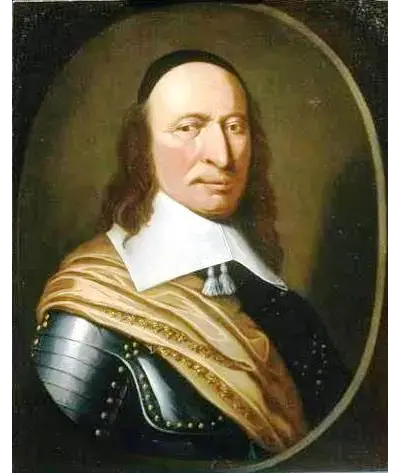
Peter Stuyvesant served as the last Dutch director-general of the colony of New Netherland from 1647 until it was ceded provisionally to the English in 1664, after which it was split into New York and New Jersey with lesser territory becoming parts of other states. He was a major figure in the early history of New York City and his name has been given to various landmarks and points of interest throughout the city (e.g. Stuyvesant High School, Stuyvesant Town, Bedford–Stuyvesant neighborhood, etc.).
