Qianlong Emperor Quotes
Our dynasty’s majestic virtue has penetrated into every country under Heaven …. I set no value on objects strange or ingenious and have no use for your country’s manufacturers.
Macartney did not even get to see the Emperor. Qianlong wrote the statement and left it on his throne and that is all that the British Emissary got from his trip. In reality much of the difficulty had to do with the refusal of the English party to observe Chinese Court Etiquette. It all had to do with bowing and kowtowing. The Chinese chief minister persuaded the Emperor that since China was the center of the Universe and the most advanced civilization as such China was in no need of the Barbarian English. Macartney would not kowtow or prostrate themselves in front of the Dragon Throne insisting that kneeling on one knee and bow to the throne as they did for their King. So the king never appeared and MacArtney returned empty-handed. In contrast Isaac Titsingh, the Dutch trade emissary did kowtow and follow court etiquette and was quite successful.
Qianlong, 1711-1799, Fifth emperor of the Chinese Manchu Qing Dynasty, Response to Lord George Macartney, representative of King George, who visited China to open up and develop trade, 1793
Sourced by: Eigen's Political and Historical Quotations

This was in response to English Emissaries who wanted to establish trading businesses in China. The Emperor would not even meet personally with Lord McCartney, the first British envoy because McCartney would not kow-tow to the Emperor. The “hongs” were special businesses set up by Chinese businessmen who had paid the Proper fee, for the purposes of being traders with foreigners. Canton, now Guangzhou, is 150 years later still the major international trading center in China although there are no longer restrictions. At the time, the British paid for their Chinese good with Opium that they had purchased in their Indian Colony. English cloth and other goods would be sent to India, traded for opium, which was brought to China and traded for tea, silks and porcelain which were returned to England and turned into cash than was worth much more than their original purchase and the cost of the voyage.

Congress was delighted with this report. This quotation is interesting for a number of reasons. In this first contact between Americans and the Chinese, foreign trade was the main subject of interest, and when the Chinese saw the size of the new nation, their immediate interest was to sell America Chinese manufactured goods. By the start of the 21st century, the largest trade the world had ever seen was that between American and China with us getting Chinese manufactured goods just as the 1785 Chinese and Americans at this meeting envisioned.

This is one of the first recorded recognitions of globalization as an economic force.


The “foreign tribes” were the English and other European traders who were bringing opium to China. Lin had assembled a fleet of 80 ships at the mouth of the Pearl River to persuade the European powers that they would fight if the foreign ships would not cease trading in opium. The British in particular were not intimidated, and they militarily forced the Chinese to accept their “right” to sell opium. The Emperor sent Lin to the “boondocks”—see {621320} for misjudging and provoking British military action, but Lin is remembered for his sound moral and public health perspective. A bronze statue of Lin Zexu was erected in his honor in Chatham Square (Kimlau Square) of New York City's Chinatown and many other places in the world.


The modern objections to international free trade are not so modern after all. Fitzhugh did not originate this idea but was merely documenting what was commonly believed by many in pre Civil War America regarding free trade.


Referring to the totally inadequate diplomatic communications in the political confusion and crises that led up to the First World War. None of the countries really wanted a large war, but the diplomatic communications were so bad that all operated on the assumption that the others were moving against them and they had to defend themselves or their treaty allies and there were very few opportunities to discern what other countries would do and all of Europe and much else of the world slipped out of control.


1st Earl of Beaconsfield. The Dutch and British landed at Capetown, the Southern tip of Africa and gradually expanded North. The Zulus were equally expansionist in Africa. They started from Central Africa and expanded South. Both these expansionist powers seized the land from the indigenous Blacks. It was a race for who could dominate the land first. Eventually, these two powers ran into each other and there were two Zulu-English wars in which the Zulus not only held their own against the dominant white world power, but defeated them in several major battles. Many of the English clergy admired the Zulus, and the major political issues in Europe had to do with what was called the “Scramble or Africa”.

This proverb was quoted by Winston Churchill in his address to Congress, January 17, 1952, Even when China was controlled by colonial powers, those same powers were changed by their contact.


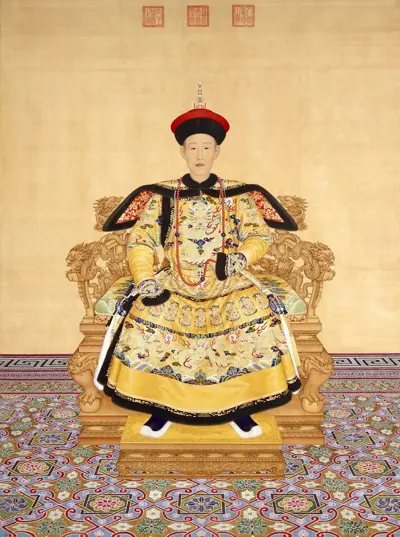
The Qianlong Emperor was the fifth Emperor of the Qing dynasty, and the fourth Qing emperor to rule over China proper, reigned from 1735 to 1796. Born Hongli, the fourth son of the Yongzheng Emperor, he reigned officially from 11 October 1735 to 8 February 1796. In 1796, he abdicated in favour of his son, the Jiaqing Emperor—a filial act in order not to reign longer than his grandfather, the Kangxi Emperor, who ruled for 61 years. Despite his retirement, however, he retained ultimate power as the Retired Emperor until his death in 1799. He thus was one of the longest-reigning rulers in the history of the world, and dying at the age of 87, one of the longest-lived. As a capable and cultured ruler inheriting a thriving empire, during his long reign the Qing Empire reached its most splendid and prosperous era, boasting a large population and economy. As a military leader, he led military campaigns expanding the dynastic territory to the largest extent by conquering and sometimes destroying Central Asian kingdoms.
