Gamal Abdel Nasser Quotes
Our basic objective will be the destruction of Israel. The Arab people want to fight.
Nasser, Gamal Abdel. Speech to Arab Trade Unionists. 26 May 1967, Cairo. Reprinted in The Israel-Arab Reader, edited by Walter Laqueur and Barry Rubin, Penguin Books, 2001, p. 113.

Just before the Six Day War. Syria did take the initiative and provoked the war which the Arabs lost badly. Ironically, Egypt and Jordan, pushed into the war by Syria, lost the most in manpower and territory.


The Arab League Members have historically been at each others throats with little concordance except hatred of Israel and Jews

A major issue amongst Israeli’s is to how they should relate to those hostile Islamic nations in their area who claim they are at war with Israel or the Jewish People. This position in effect says that the oratory of those Islamic groups that claim that they are in a war—a holy war even—should be taken at their word and treated as a wartime enemy and Israel should actively attempt to kill and destroy them.


This was one of the most accurate foreign policy assessments ever made. The next year the first Arab-Israeli war began when the state of Israel came into being. See {624566} for another accurate prediction.
14 Arab Armies in a coordinated attack on the 1 day old Israeli state, intended to massacre all the Israelis as demonstrated by this quote. Note that this kind of extermnination intent was advertised with pride. To everyone's surprised, the Jewish defenders not only beat back the viscious attacks but enlssarged their terroitory by capturing strategic sites from which the attacks had been launched. Many people credit to the Israely victory to the fact that they were litterally fighting for their lives. Defeat would have meant death for them and their families. The Arab armies, in contrast, were fighting for land that other Arabs claimed that should have been theirs. The willingness to stand and fight for this goal did not match the self preservation that motivated the Israelis--especially in the aftermath of the Holocaust killing 6 million Jews in WWII.
There are some who argue that the quotation was made earlier and was not meant as an incendary call for massacre of Israelis. It well may be that in his original thinking, he was predicting what would happen if the State of Israel was created, basing his thoughts on historical artrocieties of the past. And many think he was concerned about that possible outcome and was trying to avoid it. The import of the quotation was not necessaruly to hisltorically blame Assam for the point of view but to simply establish that there were many Arab voices calling for victories of history where there were massacres in the Middle East. And there were those who took Azzam's quotation and broadcasted it on Arab radio, calling for the very massacre that Assam may have been warning about. Note that this notion of Jewish massacre and extermination was also picked up 60 years later and called for by the President of Iran.


It is easy for those in London to wish for missiles and other weapons to be launched at others. If an Iranian missile were to hit Israel, he would celebrate. Then when the Israeli retaliation strike hits Iran, he will be among the first to call for a cease fire and plead for intervention lest there be bloodshed in Iran. Somehow the Middle East has a disproportionate number of people who are terribly enthused about attacking others without considering the consequence of the retaliation and counter attack.

Nasser was indeed planning an attack. Israeli intelligence had discovered it, and the Israeli’s informed President Lyndon Johnson who in turn called Kosygin. Nasser and the Arabs had miscalculated again and ended up being not only defeated in the war they wanted but totally embarrassed by the incredibly poor performance of the Arab armies who greatly outnumbered the Israelis but had no stomach for a fight.
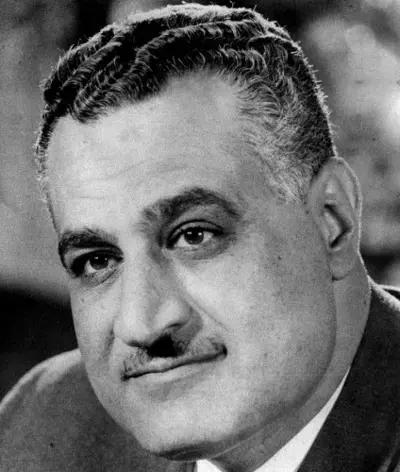
Gamal Abdel Nasser Hussein was an Egyptian politician who served as the second President of Egypt from 1954 until his death in 1970. Nasser led the 1952 overthrow of the monarchy and introduced far-reaching land reforms the following year. Following a 1954 attempt on his life by a Muslim Brotherhood member, he cracked down on the organization, put President Mohamed Naguib under house arrest and assumed executive office. He was formally elected president in June 1956.
