Ambrose Bierce Quotes
One of the greatest of poets, Coleridge was one of the wisest of men, and it was not for nothing that he read us this parable. Let us have a little less of "hands across the sea," and a little more of that elemental distrust that is the security of nations. War loves to come like a thief in the night; professions of eternal amity provide the night.
Bierce, Ambrose. The Collected Works of Ambrose Bierce, Volume XI. The Neale Publishing Company, 1912.


Israel's Arab enemies do not simply want to control the territory and/or the economic resources. Their aim, overtly stated thousands of times since the formation of Israel, is to "drive the Jews into the sea", murder the population, obtain revenge for their percieved humiliation that "foreigners" to the region and their religion could build a society so far advanced compared to Arabs on the harsh land abd without any of the oil riches that some of the Arab states had. Israel has won all the wars that the Arabs have initiated, and never murdered the population, and provide the "occupied territiries" with better medicine and infrastructure than the Arabs achieve on their own.

Although Great Britain had abolished slavery, British economic interests during the Civil War suffered because of the northern blockade of the South. Much political opinion in England was hostile to the blockade policies of the Union. Bright, a great admirer and supporter of the United Sates and the Union cause was concerned that the United States might drift into War with Great Britain. His letter to Senator Sumner was written with the understanding that it would be in shared with President Lincoln, and it was actually read at a cabinet meeting.


After the attack on Fort Sumter, the South Sent “diplomats” to negotiation with the Government. Unfortunately for all, the South really was not open to negotiations as they only had two predetermined positions they would agree to: The first was that the Government should guarantee the perpetual right of states to have slavery if they wished and that fugitive slaves would be returned by the non-slave states. The second was that the Union should recognize the Confederacy as an independent nation and have peaceful relations between the two. The first was impossible to deliver even if the Union would agree to continue slavery, there was no way that the Federal Government could enforce the return of fugitive slaves from many northern states where they were free the second they set foot in the state, and the Northern states demanded States Rights and not being forced to return Fugitive Slaves forcing the Southern States to oppose States Rights when it came to Fugitive Slaves while favoring it for slavery itself. The Federal government could not enforce the Dred Scott Decision under the pro-South Buchanan administration. And Lincoln and most of the Northern Politicians would not accept a complete dissolution of the Union. There are no other possibilities the South would accept and there was really nothing to negotiate.


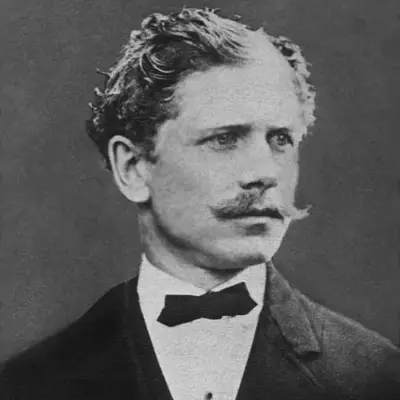
Ambrose Gwinnett Bierce was an American short story writer, journalist, poet, and Civil War veteran. His book The Devil's Dictionary was named as one of "The 100 Greatest Masterpieces of American Literature" by the American Revolution Bicentennial Administration. His story "An Occurrence at Owl Creek Bridge" has been described as "one of the most famous and frequently anthologized stories in American literature"; and his book Tales of Soldiers and Civilians (also published as In the Midst of Life) was named by the Grolier Club as one of the 100 most influential American books printed before 1900.
