Bertrand Russell Quotes
One of the commonest things to do with savings is to lend them to some Government. In view of the fact that the bulk of the public expenditure of most civilized Governments consists in payment for past wars or preparation for future wars, the man who lends his money to a Government is in the same position as the bad men in Shakespeare who hire murderers. The net result of the man's economical habits is to increase the armed forces of the State to which he lends his savings. Obviously it would be better if he spent the money, even if he spent it in drink or gambling.
Russell, Bertrand. "In Praise of Idleness." In Praise of Idleness and Other Essays. George Allen & Unwin, 1935, p. 19.


Jefferson was opposed to a standing army or a buildup of revenue even in case of war. He thought that a national surplus might tempt an administration to engage in war. This was one of the biggest differences between the Jeffersonians or Republican Democrats as they called themselves and the Federalists led by George Washington and John Adams. Washington was a strong advocate of military preparedness, while Jefferson believed that a nation which had a strong army and war chest would be too easily tempted to use it. That debate has raged in America since. However, at the beginning of the second world war, the then conservative party, the Republicans, had adopted the Jeffersonian view and it was FDR and the Democrats arguing for armament and preparedness. The United States was terribly unprepared for war, but mobilized rapidly and won the day. Since then both parties have supported military preparedness and the political argument has been over the degree, but there are few Jeffersonians left when it comes to military preparedness.

This was an official publication of the U. S. Army. The First World War had very little affect on future military preparedness At that time conservatives in Congress were very isolationist and military preparedness was not a high priority or even a significant political issue. The Democrats then were more supportive of military spending than the Republicans. It took World War II, for which America was very unprepared, to produce a change in public and political opinion regarding military preparedness.


In 1878 there was tension between England and Russia. Some in England were militant advocates of war. This song was extremely popular among them. As a result, they became known as Jingoes or Jingoists. The song became popular in America at the approach of the Spanish-American War and jingoism became part of the American political vocabulary.

Even in democratic America, this has been true. We spend almost any amount of money to give our military the weapons of war that will make them more effective soldiers, but when they return with mental and physical wounds, government money is not so easy to come by to preserve them in good health. Cost is a major consideration in Veterans benefits and care, but weapons expenditures have little restraint. It has been so for many years in many cultures.


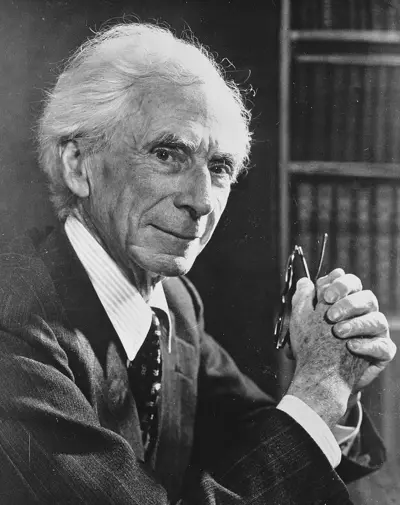
Bertrand Arthur William Russell, 3rd Earl Russell OM FRS was a British polymath, philosopher, logician, mathematician, historian, writer, social critic, political activist, and Nobel laureate. Bertrand Russell was one of the most influential and widely known intellectual figures of the twentieth century. In 1950 he was awarded the Nobel Prize in Literature for his extensive contributions to world literature and for his “rationality and humanity, as a fearless champion of free speech and free thought in the West.“
