Ron Paul Quotes
War is never economically beneficial except for those in position to profit from war expenditures.
Ronald E. Paul, U.S. Congressman (Republican, TX), Libertarian Nominee for President, Conscription - The Terrible Price of War, November 21, 2003
Sourced by: Eigen's Political and Historical Quotations


There has been no war in US history where we ever knew who was getting the contracts during the war.
This included even the contracts that had nothing to do with the war, like the contractor who provided transportation for returning veterans or services to soldiers families when they were overseas. Individual contracts come into the open but the government has never supplied a list of the contracts to the public could see who was making money from the war and determine if the administration in power was selected the best and least expensive contractors or just rewarding donors and cronies.

The hostilities in Europe were proof that:


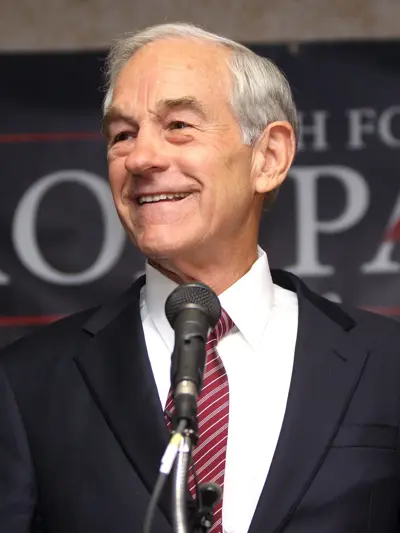
Ronald Ernest Paul is an American author, physician, and retired politician who served as the U.S. Representative for Texas's 22nd congressional district from 1976 to 1977 and again from 1979 to 1985, and for Texas's 14th congressional district from 1997 to 2013. On three occasions, he sought the presidency of the United States: as the Libertarian Party nominee in 1988 and as a candidate for the Republican Party in 2008 and 2012. A self-described constitutionalist, Paul is a critic of the federal government's fiscal policies, especially the existence of the Federal Reserve and the tax policy, as well as the military–industrial complex, the war on drugs, and the war on terror. He has also been a vocal critic of mass surveillance policies such as the USA PATRIOT Act and the NSA surveillance programs. He was the first chairman of the conservative PAC Citizens for a Sound Economy, a free-market group focused on limited government, and has been characterized as the "intellectual godfather" of the Tea Party movement, a fiscally conservative political movement that is largely against most matters of interventionism.
