W. H. Auden Quotes
One cannot walk through an assembly factory and not feel that one is in Hell.
Auden, W. H. The Dyer's Hand and Other Essays. Random House, 1962, p. 77.


Sorensen and one of the foremen worked out the idea for the assembly line on one of their “days off.” The Model T car was the first item that was made using an assembly line where the work moved to the workers rather than the workers to the work.


Ford’s associate Henry Sorenson also was deeply involved with developing the concept of an assembly line. History has tended to give the credit to Ford as he was the boss. However, it is doubtful that either man thought of the concept independently by mutually and collegially developed and implemented the idea.
Ford, an inveterate racist and anti-Semitic in his old age was very liberal when he first started and accomplished so much. He not only hired foreigners, but also some men of his initial workforce were handicapped. He was proud of the fact that jobs could be created on his concept of an assembly line that was so specialized that handicapped people could be productive workers as they did not have to do everything in the manufacturing process. Since the assembly line did the moving, men who had trouble walking could sit and be very productive at some tasks. Further, Ford did not try and pay his assembly line workers less than the going wage because their skills could be much narrower. He actually doubled the salaries (see {642361}) and picked men who were not wed to the older, traditional way of manufacturing things. The productivity came from the engineering of the cars and the assembly line, not be cutting wages, a practice that he did not continue as he grew older and tried to make his money the traditional way of exploiting the workers more. When the other auto companies had recognized the union, the elder Ford would not.


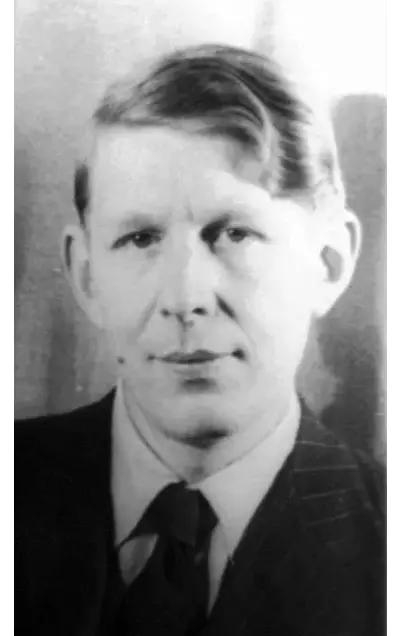
Wystan Hugh Auden was an Anglo-American poet. Auden's poetry was noted for its stylistic and technical achievement, its engagement with politics, morals, love, and religion, and its variety in tone, form, and content. Some of his best known poems are about love, such as "Funeral Blues"; on political and social themes, such as "September 1, 1939" and "The Shield of Achilles"; on cultural and psychological themes, such as The Age of Anxiety; and on religious themes such as "For the Time Being" and "Horae Canonicae".
