Thomas Nelson Page Quotes
A great factory with the machinery all working and revolving with absolute and rhythmic regularity and with the men all driven by one impulse, and moving in unison as though a constituent part of the mighty machine, is one of the most inspiring examples of directed force that the world knows. I have rarely seen the face of a mechanic in the action of creation which was not fine, never one which was not earnest and impressive.
Page, Thomas Nelson. John Marvel, Assistant. Charles Scribner's Sons, 1909.


Ford, an inveterate racist and anti-Semitic in his old age was very liberal when he first started and accomplished so much. He not only hired foreigners, but also some men of his initial workforce were handicapped. He was proud of the fact that jobs could be created on his concept of an assembly line that was so specialized that handicapped people could be productive workers as they did not have to do everything in the manufacturing process. Since the assembly line did the moving, men who had trouble walking could sit and be very productive at some tasks. Further, Ford did not try and pay his assembly line workers less than the going wage because their skills could be much narrower. He actually doubled the salaries (see {642361}) and picked men who were not wed to the older, traditional way of manufacturing things. The productivity came from the engineering of the cars and the assembly line, not be cutting wages, a practice that he did not continue as he grew older and tried to make his money the traditional way of exploiting the workers more. When the other auto companies had recognized the union, the elder Ford would not.

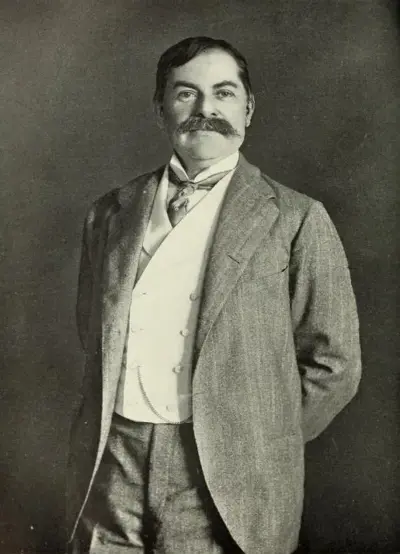
Thomas Nelson Page was an American lawyer and writer. He also served as the U.S. ambassador to Italy from 1913 to 1919 under the administration of President Woodrow Wilson during World War I. In his writing, Page popularized the Southern tradition of the plantation genre. Page first got the public's attention with his story "Marse Chan" which was published in the Century Illustrated Magazine. One of Page's most notable works include The Burial of the Guns and In Ole Virginia. Page died in Oakland on November 1, 1922 aged 69.
