I. F. Stone Quotes
Once the Secretary of State invites you to lunch and asks your opinion, you’re sunk.
Stone avoided all socialization with officials and politicians and unlike most journalists in Washington DC did not attend the many parties that are so common in the nation’s capital.
I. F. Stone, 1908-1989, Investigative Journalist & Political Writer, Advice to journalists covering politics, Quoted in Karl Weber, The Best of I. F. Stone, 2007
Sourced by: Eigen's Political and Historical Quotations


The three "estates" were the Lords Spiritual (Clergy), Lords Temporal (Aristocracy) and the Commons. The other three estates have been forgotten, but the press is still known as the "fourth estate." See Emanuel Sieyes, s.v. "Voters and Voting," on the Third Estate


Until the 20th century almost all American political media were shamelessly and overtly biased—left or right. Political Parties had their own de facto publications much like Fox News became for the Republicans in the 21st century. In the 20th century journalism developed into a profession that evolved standards of objectivity in reporting. That norm then prevailed for about 70 years. With the extreme polarization of the later years of the 29th Century the right wing began to accuse much of the media of a left wing bias, and the media tended to react as Krugman describes in this quotation. The model of having spokespersons for “each side” of an issue works for highly subjective political preferences with a two party system, but where it broke down is with scientific and technical issues. On these, there often really are not two scientific points of view, but there is a scientific consensus of the vast majority of scientists and almost all the prestigious and accomplished scientists are in accord. However, there may be some who have a cultural, religious and/or political concern for some science and its implications for society. They in turn find a scientist or two, often one who is unaccomplished and not recognized in the scientific field to argue a different point of view. The media have tended to equate the two and have a “debate” as if there were two sides to the science when there are not. These issues tend to cluster around scientific medical issues involving sex and birth control methods, environment and conservation, evolution, the age of the earth and the method of creation of the universe. The problem is particularly exacerbated by the general scientific illiteracy of the American population and the relatively few journalists who themselves are scientifically literate who can explain scientific issues well.


After much persecution of Quakers and forbidding them from holding public meetings, Cromwell switched tactics and accepted the Quaker leadership word for the fact that they would not use civil force to damage the civil government. After getting George Fox’s agreement, Cromwell invited Fox and the Quaker leadership to state dinner and has surprised when the Quakers “stiffed” the Lord Protector and just went home. The source for this is Fox himself so may be a little subjective.


Many scholars believe that complete objectivity is impossible psychologically. Hence, neutrality is a better standard and goal some argue.

His use of the word “character” was not meant in the general sense of a reporter’s behavior and demeanor as a human being, but rather the journalists character relative to the battle—he does not wish to kill or injure anyone but wants to communicate the events to the public. This was the “purity” to which the General referred. Actually, a number of journalists and photographers followed the suggestion and wore a white—what looks today as a full-length lab coat. See http://memory.loc.gov/pnp/cwp/4a{40000}/4a{40900}/4a{40924}r.jpg for a photo of the uniform that photographer Mathew Brady wore.


McCarthy was in many ways like Donald Trump. One was that the press loved to cover his statements and accusations that were so absurd and sensational that they sold a lot of nespapers, magazines and obtained many TV / Radio viewers/listeners. As a result he got much more media coverage that he warranted in the view of many. In retrospect, Kampton, one of the most prestegious journalsits of his era, felt that he had been guilty of wrongful judgment in covering McCarthy and giving him so much press, just as many journalists did after they covered Donald Trump in the 2016 Campaign.

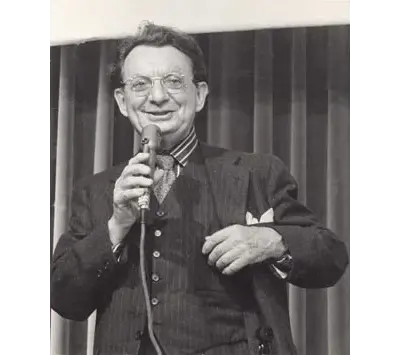
I. F. Stone was a politically progressive American investigative journalist, writer, and author.
