Mitch Kapor Quotes
Old ways of thinking die hard, particularly when they were weaned by legally enforced monopolies.
Kapor, Mitchell. "Where Is the Digital Highway Really Heading? The Case for a Jeffersonian Information Policy." Wired, vol. 1, no. 3, Condé Nast, July/Aug. 1993.


This volume roughly is to Islam what the Gospels are to Christianity. To most Muslims The Sunnah is a collection of holy material on the life of Mohammed. It is not of the force or importance as the Koran, but it is revered.


The Kimberly and Comstock lodes were natural deposits of copper and silver so close to the surface that it required very little work to remove the metal and sell the it.


One irony that some critics of Murdoch’s enterprises make is that despite his personal views about monopoly his businesses try to attain and maintain monopoly status whenever it can.


At the time, the Chamber of Commerce represented the small and medium business which were being decimated by the large businesses and their monopolies. A century later, the Chamber became a creature of the large business and their money and by 2010, the Chamber had virtually become the representative of the large businesses outside of the high technology field and had become a campaigning arm of the Republican Party, In 1880 however, they called public attention to the abuses of the large corporate monopolies.


At the time, there was generally only a single newspaper in an area in New Zealand.

The Republicans had been badly beaten in the 2012 Presidential Election. Many attributed the loss to the dissatisfaction of the electorate with the Republican ideas which had become more and more conservative in recent decades. Others, like Rubio, wanted to maintain the existing ideas which were very different from the Republican ideas earlier when they won more elections.

Boeing had the foresight to invest in the concept of Air Mail by bidding low at the beginning, becoming the best in the nation, and then raising prices when no one else can compete—a technique called “buying in”. However, he was so successful that he soon had a monopoly on all the airmail in the country. Each new airmail contract would require more and more capability and Boeing used the existing contracts to finance the R&D and training of manpower to present a better and better service. Soon, no other company could compete at any price. Boeing indeed had a monopoly but each step of the building of it he did at the request of the government or was the low bidder and saved the taxpayer money. The airmail contracts were canceled and air service was nationalized. William Boeing was so disgusted by the way he was treated in the Congressional Hearings, that he sold his interest in the Boeing Company and would have nothing to do with making planes or providing services to the government thereafter.

This is an important quotation because Ellison, one of the best businessmen in the world is also much more candid than most others. Here he admits that he strives to achieve monopoly status for his company. Almost all large businesses try to become monopolies so that they do not have to compete on price, quality, and service. Few will admit publicly that much of their effort goes towards an objective that is detrimental to the nation and society and in is in large part illegal.

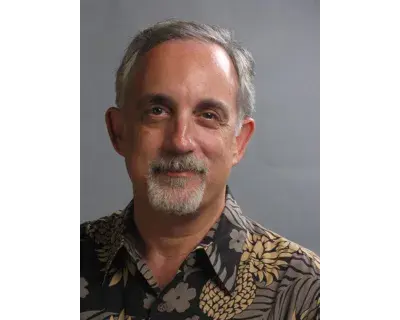
Mitchell David Kapor is an American entrepreneur best known for his work as an application developer in the early days of the personal computer software industry, later founding Lotus, where he was instrumental in developing the Lotus 1-2-3 spreadsheet. He left Lotus in 1986. In 1990 with John Perry Barlow and John Gilmore, he co-founded the Electronic Frontier Foundation, and served as its chairman until 1994. In 2003, Kapor became the founding chair of the Mozilla Foundation, creator of the open source web browser Firefox. Kapor has been an investor in the personal computing industry, and supporter of social causes via Kapor Capital and the Kapor Center. Kapor and his wife, Freada Kapor Klein, invest in social impact tech startups that seek to narrow gaps in opportunity and access for underrepresented communities and attempt to eliminate barriers to full participation across the tech ecosystem. Kapor and Klein take a comprehensive approach to removing barriers in education and the workplace for all and fixing the leaks at every stage of the tech pipeline. Kapor serves on the board of SMASH, a non-profit founded by Klein to help underrepresented scholars hone their STEM knowledge while building the networks and skills for careers in tech and the sciences.
