Fulke Greville Quotes
Oh wearisome condition of humanity—born under one law, to another bound.
Greville, Charles Fulk, 1554-1628, English Chancellor of the Exchequer, Member of Parliament & Poet, Mustapha
Sourced by: Eigen's Political and Historical Quotations

1st Earl of Beaconsfield


_0_thumbnail_47x47.jpg "Statue of Robert Hall in Leicester.")
Many of the founding fathers were aware of such views in England as the same issues were being debated in America in the debates on Ratification of the Constitution and the required inclusion of the Bill or Rights—specifically the First Amendment.

Burke was referring to the American Colonists in the midst of the American Revolution.
Both Puritans and Quakers were persecuted and physically abused in England by the Anglican Church. The Puritans as soon as they became dominant in part of the American colonies began persecuting Quakers. The Quakers who were the majority in the Pennsylvania colony, however were tolerant of other religions. This history was another of the many reasons the Founding Fathers wanted no established church. A “scorpion” was a type of whip that was particularly painful.


Observation of the other fugitives in Canada


The nobles of the city were in rebellion and fought the English Prince of Wales. When the city was taken, the poor people as well as the nobles were executed for their part in the “rebellion.” However, the poor had no say in the matter, and it was not they who ordered the city gates shut and decided to undergo a siege, which in this case was not successful. Limoges was a heavily walled city, well provisioned for a siege, but the English had miners who undermined part of the city walls and crashed them into the moat and allowed the English to walk in easily.

Although English, Cobett spent time in America and published a newspaper, The Porcupine Gazette, in Philadelphia. We was very conservative but on the issue of slavery his resembled a liberal point of view. He never used sugar, coffee, or rum because slave labor produced them. However, he advocated legally enslaving lazy people, blacks and whites, who would not work.


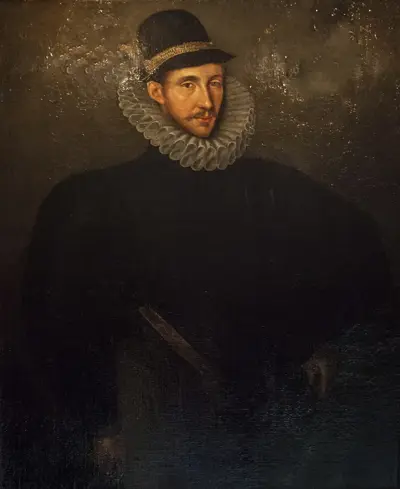
Fulke Greville, 1st Baron Brooke, de jure 13th Baron Latimer and 5th Baron Willoughby de Broke KB PC, known before 1621 as Sir Fulke Greville, was an Elizabethan poet, dramatist, and statesman who sat in the House of Commons at various times between 1581 and 1621, when he was raised to the peerage.
