Joseph Stalin Quotes
- Oh no, The Collective Farm policy was a terrible struggle... Ten million (he said holding up his hands). It was fearful. Four years it lasted. It was absolutely necessary.
Churchill, Winston S. The Hinge of Fate. Houghton Mifflin, 1950, p. 498.

Stalin’s purges and suppression of potential rivals killed off mostly other communists exceeding the number of communists killed by brutal, murderous, anti-communist forces over the world.


So many Afghans thought very differently and resisted Amin’s Government and the Russians, that the Russians pulled out of Afghanistan.

Vladimir Lenin. One of the claimed benefits of Capital Punishment has always been the inhibition of others, but it turned out that it was never very effective at that. However, prevention was Lenin’s major objective so he ordered public hanging instead of shooting—the usual method of execution at the time. This infamous quotation started the new Russian government off on a horrible record of civil and human rights. The people hanged were not particularly guilty of any crime. They were just people who had gotten, or whose family was, rich under the Czar. The disregard for rule of law was most dramatically evidenced by this Lenin order. Needless to say, rich people the world over, saw a great threat to their lives from this new state wanting to export its philosophy.
Immediately after the Russian Revolution, the provisional government appointed him as Ambassador to the United States. However, the provisional government was supplanted when the Bolsheviks took over. See {640094} and {640095} for more on the Communist struggle with the Russian Peasants. Not enamored of Communism, he stayed in the United States with many other Russian refugees.

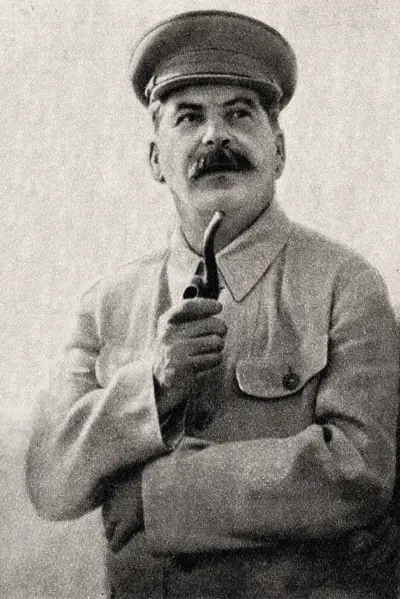
Joseph Vissarionovich Stalin was a Georgian revolutionary and the ruler of the Soviet Union from 1927 until 1953. He served as both General Secretary of the Communist Party of the Soviet Union (1922–1952) and Chairman of the Council of Ministers of the Soviet Union (1941–1953). Despite initially governing the country as part of a collective leadership, he ultimately consolidated power to become the Soviet Union's de facto dictator by the 1930s. A communist ideologically committed to the Leninist interpretation of Marxism, Stalin formalized these ideas as Marxism–Leninism while his own policies are known as Stalinism.
