Robert Harris Quotes
Unlike the Holocaust, Stalin's murders are forgotten: dust blowing in the wind.
Harris, Robert. Interview. The Guardian, Guardian News and Media, 15 Mar. 1999.


Sailer’s point is well taken though the accuracy of the numbers in his comparison depends on definition. If one assumes that the Hitler murders are confined to the 6 million or so Jews, Gypsies, and homosexuals then his numbers are right, But most people include the 22 million Russians killed in WWII and the other WWII deaths civilian and military and then Hitler caused deaths are much greater. However, the numbers are not critical to his point which is that under the guise of promoting equality many dictators have caused many deaths just as have the dictators who were preaching inequality. Extremism is always the problem.


Stalin’s purges and suppression of potential rivals killed off mostly other communists exceeding the number of communists killed by brutal, murderous, anti-communist forces over the world.

John Roy Carlson. The Armenian-Turkish enmity was vicious to the point that each people tried to kill and exterminate the other—men women and children. The atrocities committed by the Armenians were unfortunately matched by the Turks in what is now referred to as the “Armenian Genocide”—see {51838}. The armed combatants amongst Turks and Armenians were in the minority yet each side slaughtered all members of the other whenever they could. The hatred still prevails – see {588211}. And Turks and Armenians both still accuse the other of atrocities of the period.


See {604839} and {606444} as examples that O’Brien argues prove his point. However, Pol Pot’s killings were not to revolt. He had already achieved power, and the murders were a combination of vengeance and an attempt not to change government but to alter culture and values be exterminating those whose cultural perspective was different from the regime IN POWER.


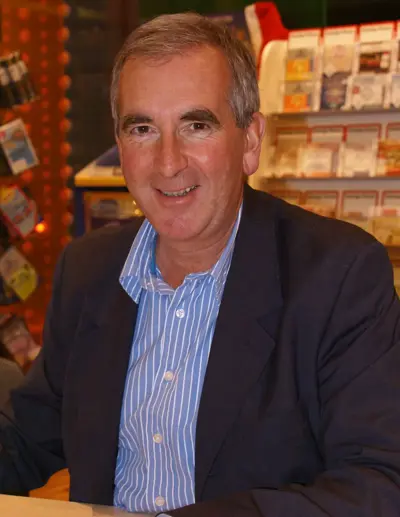
Robert Dennis Harris is an English novelist. He is a former journalist and BBC television reporter. Although he began his career in non-fiction, his fame rests upon his works of historical fiction. Beginning with the best-seller Fatherland, Harris focused on events surrounding the Second World War, followed by works set in ancient Rome. His most recent works centre on contemporary history. Harris was educated at Selwyn College, Cambridge, where he was president of the Union and editor of the student newspaper Varsity.
