Plutarch Quotes
Of the land which the Romans gained by conquest from their neighbours, part they sold publicly, and turned the remainder into common; this common land they assigned to such of the citizens as were poor and indigent, for which they were to pay only a small acknowledgment into the public treasury. But when the wealthy men began to offer larger rents, and drive the poorer people out, it was enacted by law that no person whatever should enjoy more than five hundred acres of ground.
Plutarch. Plutarch's Lives. Translated by John Dryden, revised by Arthur Hugh Clough, vol. 4, Little, Brown and Company, 1859, p. 513.


In every society where there had been past unjust ownership of land, all efforts of land reform were faced with the problem of having to dispossess the current “owners” who themselves had not been guilty of the crimes of their ancestors in unjustly obtaining the land originally. In America land reform was unworkable in most cases and the solution was usually a large monetary payment as compensation for the land.


His bill introduced in the House of Representatives. It did not pass.


At the time the number of small, independent land owners was diminishing.
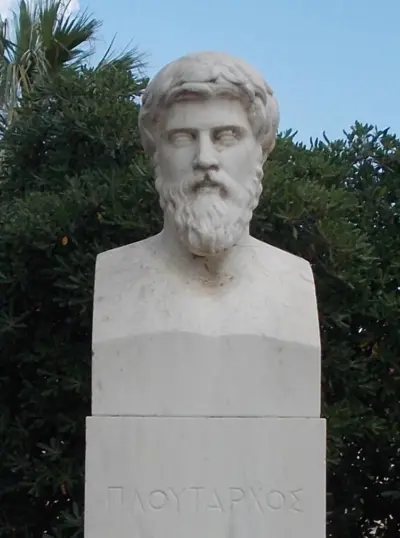
Plutarch (/ˈpluːtɑːrk/; Greek: Πλούταρχος, Ploútarchos; Koine Greek: [ˈplutarkʰos]; AD 46–after AD 119) was a Greek Middle Platonist philosopher, historian, biographer, essayist, and priest at the Temple of Apollo. He is known primarily for his Parallel Lives, a series of biographies of illustrious Greeks and Romans, and Moralia, a collection of essays and speeches. Upon becoming a Roman citizen, he was named Lucius Mestrius Plutarchus (Λούκιος Μέστριος Πλούταρχος).
