Cynthia McKinney Quotes
To any honest observer, Zimbabwe's sin is that it has taken the position to right a wrong, whose resolution has been too long overdue--to return its land to its people.
McKinney, Cynthia. "Zimbabwe Democracy and Economic Recovery Act of 2001." Congressional Record, House of Representatives, 4 Dec. 2001, p. H8790.

If the land to be redistributed is divided amongst the majority population, each parcel would be too small to make any difference in any recipient’s life. For efficient agriculture there must be large land holdings. The colonial, stolen land history is valid for most former colonies, however, in Southern Africa, the situation was more complicated. When the whites landed at Capetown in the South, they moved North “stealing” land as they went. However, in Central Africa, Shaka and his Zulus were also a colonial power, and they moved South “stealing” land from the indigenous Blacks as they went. Eventually, the two Colonial Powers—the whites and the Black Zulus—clashed and the Zulu Wars ensued. So all of the land in Zimbabwe and South Aftica was stolen from the Blacks—except about half was stolen by Blacks. After the Zulu Wars, the victorious whites ended up “stealing” land from the Black Zulus that had been stolen by them from other Blacks. Also although the English were the official colonial power, the Dutch “Afrikaners” were a powerful subculture which was dominant on many parts of South Africa and especially at the frontier and they did most of the land stealing. The ethnic English were the businessmen and the city dwellers who actually ruled that Blacks were citizens with rights and slowedmdown some of the land stealing. There is no more complicated ethnic history in the world.


In every society where there had been past unjust ownership of land, all efforts of land reform were faced with the problem of having to dispossess the current “owners” who themselves had not been guilty of the crimes of their ancestors in unjustly obtaining the land originally. In America land reform was unworkable in most cases and the solution was usually a large monetary payment as compensation for the land.


At the time, some Palestinian Arabs claimed exclusive rights to the territory on the grounds that Arabs had dominated the area for the longest period of time. They gave no credence to the fact that the Jews had dominated the area and it was the center of their kingdom for many years before—that Jews had constantly lived in the area of longer than the Arabs, nor did they give any credence to the fact that the Christians had conquered the area from the Muslims during the Crusades.

This quotation is interesting in that the Madison Administration was being very careful to not alienate the Indians in Federal land purchases. Although there are many who believe the whites never should have enticed Indians to sell land at all, there were many cases where the land sales were fraudulent and gross—The Cherokee Indians in Georgia. At this time, the Federal government would negotiate an amount for some land and pay the Indian tribe the agreed upon sum. Then another tribe might claim that the land was really theirs, they had also been hunting or living there. In some cases there were Indian wars and one tribe had banished another. Madison’s policy which he reported in this speech was to negotiate with BOTH tribes separately and pay them each the agreed upon amount—he tells the public that it is worth paying double to avoid bad feelings among the Indians. Jefferson and Madison in particular had relatively liberal Indian policies. It was President Jackson who had the worst Indian policy and produced a large proportion of immoral actions, atrocities and subsequent bad feeling.
The century to which he was referring was the 19th century---1800-1899.


The meeting included several Indians, President Grant, and the Secretary of the Interior and the Director of the Bureau of Indian Affairs. The Indians had been offered $25,000 and land in the Oklahoma Indian Territory in exchange for moving from their traditional lands.

Wayne played so many parts depicting whites in the process of expanding Westward that many people saw him as an expert on the history of the Westward Expansion. He did not comment on the whites who then kept huge ranches “selfishly” for themselves or those who selfishly would not share the mineral rich land that they had taken with anyone including the original Indian owners. So in this view, the Indians should have not been capitalists but they should have been socialists and shared their resources.
Wealthy men had purchased cheap land and moved into the area establishing large ranches and farms. The then very wealthy “newcomers” tended to do dominate the local politics and had much influence on national politics. They would employ the locals, but at very low wages.
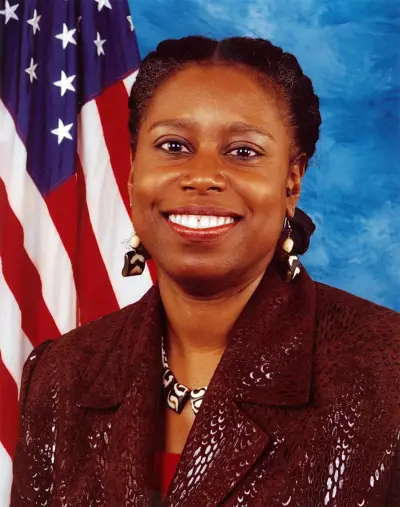
Cynthia Ann McKinney is an American politician, activist, and assistant professor at North South University, Bangladesh. As a member of the Democratic Party, she served six terms in the United States House of Representatives. She was the first black woman elected to represent Georgia in the House. She left the Democratic Party and ran in 2008 as the presidential candidate of the Green Party of the United States.
