Harry J. Anslinger Quotes
Of course, the primary interest of the Bureau of Narcotics is the enforcement aspect. From this point of view it is very unfortunate that Doctors Allentuck and Bowman should have stated so unqualifiedly that the use of marijuana does not lead to physical, mental or moral deterioration
Despite all the scientific knowledge, Anslinger and his bureau constantly lied about the dangers of marijuana—even to physicians most of whom knew better. It was so blatant that most of the American public discounted anything the Bureau said and even discounted what government health agencies told the public. So the actual problems associated with marijuana found a jaded, suspicious public. It took years to overcome the Anslinger hyperbole. See {593333} and {593334}.
Harry J. Anslinger, 1892-1975, U. S. Commissioner of Narcotics, Letter to American Journal of Psychiatry, 1942
Sourced by: Eigen's Political and Historical Quotations

This type of statement made by otherwise respectable government officials has developed a view on the part of many Americans that the Government lies about marijuana. See {617560}and {593334}.
This type of statement made by otherwise respectable government officials has developed a view on the part of many Americans that the Government lies about marijuana. See {617560} and {593333} .

There are great differences in the law enforcement policies throughout the country. Even when marijuana was illegal in every state, there were gret differences in the vigor with which this illegality was enforced. And local cities, towns and counties also are different. In the case of Pueblo marijuana was illegal in his childhood but the local authorities chose not to enforce those laws. Even within the same city or town there are often differential enforcement policies for different neighborhoods very ften. Also some communities have a strong libertarian viewpoint and there has been a reluctance to enforce lws relating to personal life choices.


Marijuana was and still is a health and social problem in that people who tend to use it---especially young people---tend not to focus on their friendships, their work and study obligations, their own development and welfare. However it is nowhere near the degree of deleterious problems of alcohol and other drugs like heroin, cocaine, and methamphetamine. There is no record of anyone dying from an over dose or marijuana while alcohol and other drugs kill hundreds if not thousands a year. But none of those health emergencies compare with the flu which each year kills over 20,000 Americans who do not get inoculations or highway crashes which kill about 50,000. Yet Nixon did not characterize these as “national emergencies.”
Cixi had issued a 10 point edict designed to end opium use in China. One of its most interesting elements was that it only applied to Chinese under the age of 60. She recognized that for those elderly people who are thoroughly addicted to opium, prohibition would be to radical a change and their life expectancy was not very long. At the time, the average lifespan of Chinese was under 50.


Explaining why he wants alcohol-ad warnings in all alcohol ads:

La Guardia had seen some Federal officials claim that marijuana was a very dangerous drug leading to insanity, violence and murder if used. See {624434} and {590692} . However, none of the “dangers” had been verified by science and medicine/ La Guardia was the first public official who asked scientists to study the substance and let people know the real danger if any. The report was a major contracdiction to the federal propaganda that had been issued, and even continued to be after this study by the prestigious New York Academy of Medicine. It has been known for a long time that marijuana was relatively harmless when compared with other drugs such as heroin, cocaine, alcohol and tobacco. At the time the government officials had lied to the public grossly exaggerating the negative effects of marijuana. And scientific research was prohibited in most cases until the 21st century. And the evidence is now available that while marijuana does not have the very dangerous effect that was claimed, it is not benign either. Marijuana has an effect on the brain—especially of youth who are still developing—that is not totally understood. And there is a definite negative relationship between the extent of marihuana smoking student grades. Also we know now that marijuana impedes social development as well as intellectual. The causality is not clearly established however. It is possible that the poorer students and those less socially skilled have little success and use marijuana. With the exception of many adults who claim that marihuana helps them tolerate cancer drugs and other pain, there is no other benefit that has been found. Youngsters can think they are “cool” but that is about it on the plus side. On the negative side, marijuana is not the most dangerous drug one can take, but it is certainly not harmless.


It is not clear that Wright actually used these words of the first title or the editors created it. The substance is his and the second line is definitely his. At the time, the average American mistakenly thought that China had a much higher consumption rate.

He was the first Chinese official to make opium illegal. However, British many merchants were involved in a complicated trade scheme whereby they brought opium to Canton. They paid not attention to the new laws against opium the same as their Chinese customers. Lin Zexu, perceiving Queen Victoria to have powers equivalent to the Chinese Emperor who could do anything in China, He assumed that the Queen could and would control the merchant’s behavior, and before punishing the British merchants, he was putting the Queen on notice. There is no record of what Victoria did, if anything. When Lin Zexu tried to enforce his ban on opium, the British Merchants resisted and the First Opium War broke out between China and Britainin which the Chinese were humiliated and resent to this day. A bronze statue of Lin Zexu was erected in his honor in Chatham Square (Kimlau Square) of New York City's Chinatown.


It is not clear whether Fish actually believed what he was saying or was using extreme hyperbole for the purposes of passing an act he favored. This type of statement made by otherwise respectable government officials has developed a view on the part of many Americans that the Government lies about marijuana. See {593333} and {593334} for other examples.


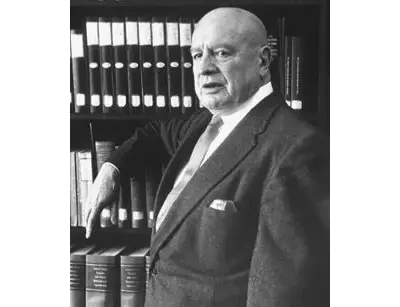
- Born: May 20, 1892
- Died: November 14, 1975
- Nationality:
- Profession:
Harry Jacob Anslinger was a United States government official who served as the first commissioner of the U.S. Treasury Department's Federal Bureau of Narcotics during the presidencies of Hoover, Roosevelt, Truman, Eisenhower, and Kennedy. He was a supporter of Prohibition, and of the criminalization of drugs, and spearheaded anti-drug policy campaigns. Anslinger held office as commissioner for an unprecedented 32 years, until 1962. He then held office for two years as U.S. Representative to the United Nations Narcotics Commission. The responsibilities once held by Anslinger are now largely under the jurisdiction of the U.S. Office of National Drug Control Policy.
