William Harper Quotes
Odium has been cast upon our legislation on account of its forbidding the elements of education to be communicated to slaves. But, in truth, what injury is done to them by this? He who works during the day with his hands does not read in the intervals of his leisure for his amusement or the improvement of his mind. If there were any chance of their elevating their rank and condition in society, it might be a matter of hardship that they should be denied those rudiments of knowledge which open the way to further attainments.
This was an example of the circular logic that defense of slavery produced. Slaves are not interested in education. If they were it would be bad to deny them an education to advance themselves. But since a slave cannot advance, the point is moot and there is no reason to educate a slave even if he or she wanted an education.
William Harper, 1790-1847, U. S. Congressman (Jacksonian Democrat, SC), Chancellor of South Carolina, 1837
Sourced by: Eigen's Political and Historical Quotations


The Emperor was then only 20 years old and it is doubtful that this was actually written by him personally or even that he was the originator or driver of this policy—probably the strongest statement regarding education of any nation in history. Nonetheless, it is a great quotation on the role of education in the nation. He even ordained that all girls should be educated—an achievement which had not been achieved by the majority of countries 140 years later in 2012. Most incredible about this quotation is that the Emperor made everything else of importance subordinate to the education of children." Meiji the Great


During the 1830’s the debate over whether the British Empire should abolish slavery was revived and caused much unrest, It illustrates the total incompatibility between slavery and literacy & education.

Ruffin is more widely known as the man who fired the first shot of the Civil War.

In 1877 Wasburn was dropped from the List of Ministers by the Unitarian Church. He had become quite atheistic.

This quotation is interesting for two reasons. First it is a good example of the twisted logic of some of the Slavery apologists who claimed that the Negro slave was better off than the free wage earner. The second reason is that it illustrates the norms of the treatment of the working man before the Civil War. The union movement would change the situation for the free laborer over the next century and then holidays and worker rights became normalized in American society. See {641290} for another of his absurd arguments.

She was referring to Malala, a young Pakistani girl who was shot and badly wounded in an assassination attempt. She had publicly advocated girls attendance at school—a practice banned by the ultra-fundamentalist Taliban.
_0_thumbnail_47x47.jpg "A portrait of Richard Allen, a Methodist bishop and founder of the African Methodist Episcopal Church")
Many whites thought that the solution to the problem of free and emancipated Negroes was to send them to Africa. They assumed that the negroes would by desirous of that solution also, but they rarely asked them. When they did, they received answers much like this one from one of the leading Black clergymen in America.


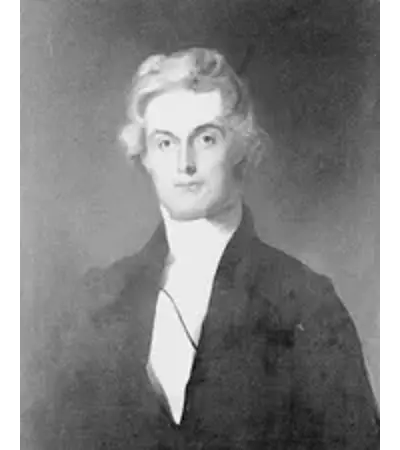
William Joseph Harper was a jurist, politician, and social and political theorist from South Carolina.
