David C. Unger Quotes
Not every Congressionally declared war will be remembered as a “good war”, but few if any Presidentially declared wars, if any, will ever be.
WWII has been remembered as a “good war” which had the overwhelming support of American at the time and in historical retrospect.
David C. Unger, Political Journalist, Educator, Editor, and Historian“President Truman & National Security”, Key West, FL, May 18, 2013
Sourced by: Eigen's Political and Historical Quotations


When the Senate was debating the Gulf of Tonkin Resolution, which would empower the President to take "all necessary measures" to repel any armed attack on U. S. forces, Senator Morse was one of only two Senators opposing the resolution:

In 1949 the NATO treaty was signed. There was concern that a phrase in the treaty authorizing signatories to take "such action as it deems necessary, including the use of armed force" would undermine Congress's powers:

President George W. Bush initiated an invasion of Iraq based on the fact that Iraq was developing nuclear, chemical and biological weapons. After the invasion however, there were none of these weapons found and much evidence that there were not any at that point in time. By the time Congress, the body which is supposed to declare war, found out that the reason for the war was bogus, it was too late. We had already occupied the country and were in the midst of a civil war. The President either acted on bad intelligence or wanted to invade Iraq for other reasons and history may finally tell us which, but Fein sees the problem as too much secrecy in the executive branch.

President Eisenhower was asked if there was any danger of the country getting inadvertently drawn into a war in Vietnam as the result of sending military "advisors":


In 1963 there was only one Congressman who expressed misgivings about United States military involvement in Vietnam:


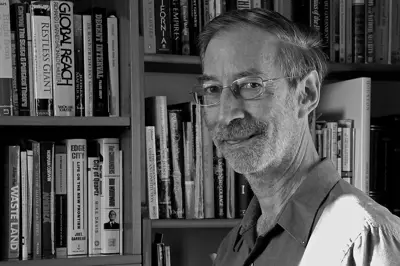
David C. Unger is a journalist, former foreign affairs editorial writer for The New York Times (1977–2013) and author of the book The Emergency State. He is currently an Adjunct Professor of American Foreign Policy at Johns Hopkins University, School of Advanced International Studies Europe, at Bologna and Contributing Editor at Survival.
