Elizabeth Cady Stanton Quotes
No privileged order ever did see the wrongs of its own victims.
Stanton, Elizabeth Cady, et al. History of Woman Suffrage. Vol. 1, Fowler & Wells, 1881.


Although Rand is one of the Conservatives' favorite writers and philosophers, only a minority would agree with her unfeeling and extreme form of a capitalistic society.

This is a variation of the famous Lord Acton quotation: {292904}.


The nobles of the city were in rebellion and fought the English Prince of Wales. When the city was taken, the poor people as well as the nobles were executed for their part in the “rebellion.” However, the poor had no say in the matter, and it was not they who ordered the city gates shut and decided to undergo a siege, which in this case was not successful. Limoges was a heavily walled city, well provisioned for a siege, but the English had miners who undermined part of the city walls and crashed them into the moat and allowed the English to walk in easily.

Alexie, an American Indian, studied wrote about the phenomenon whereby the Indians who were brutalized and attacked by whites with modern weapons and other technological advantages, in the process of defending themselves and their way of life became oppressors to whites in many situations where they could dominate a local scene. Likewise, the Israelis, who were totally oppressed in the Middle East for years and dominated by the more numerous Arabs with over a dozen established national armies attacking the Jewish civilian population when Israel first became a state. However the Jews survived and each time the Arabs attacked and further oppressed the Israelis, the Jews became stronger until at some point the became oppressors of many of the Arabs. The oppressors became the oppressed and vica versa.
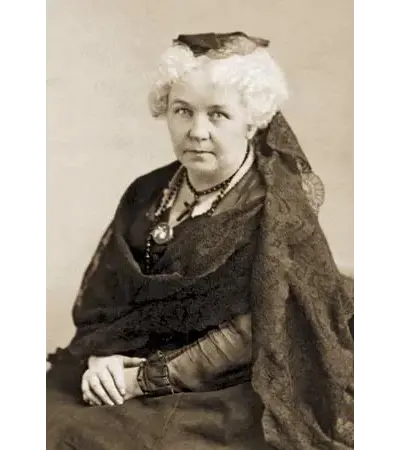
Elizabeth Cady Stanton was a leader of the women's rights movement in the U.S. during the mid- to late-1800s. She was the main force behind the 1848 Seneca Falls Convention, the first convention to be called for the sole purpose of discussing women's rights, and was the primary author of its Declaration of Sentiments. Her demand for women's right to vote generated a controversy at the convention but quickly became a central tenet of the women's movement. She was also active in other social reform activities, especially abolitionism.
