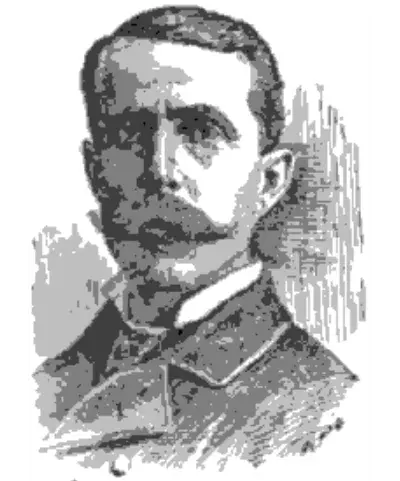
Herbert Tuttle Quotes
No other people learn so little by example as the French. With the United States before them as the model of democracy crystallized into an effective system, the French invariably drift into anarchy or coups d’état. Their republics have had too little or too much cohesion among the parts, or they have had no parts at all; the executive has been made a cipher or a despot. They have been destroyed by the incapacity of the builders, and their ignorance of the principle of checks and balances. To establish these requires mutual sacrifices, and often a high degree of political skill; but a people who are unwilling to make sacrifices, and who can produce no statesmen, are preordained to failure.
One fascinating difference between the United States and France is that Americans verbally condemn emulating other nations, while in practice we take almost everything that is useful including their most ambitions emigrants. France, in contrast extolls the virtue of embracing the best of the human race, but rarely adopts that which did not originate or develop in France even today.
Herbert Tuttle, 1846–1894, Historian & Political Scientist, “French Democracy”. The Atlantic Monthly, May 1872
Sourced by: Eigen's Political and Historical Quotations


“Personal government” meant to him charismatic individuals and demagogues who came to power in a republic and led it into a dictatorship. As opposed to representatives of political parties where a single individual could not control everything. However, this was before Adolf Hitler and his political party—the Nazis—came to power by election and turned Germany into a dictatorship. It takes more than structure to preserve democracy.

Louis Napoleon had lead a military takeover or the French democratic republican government. The other great European powers, with the exception of England and Belgium at the time did not have parliaments or they were powerless and the countries were all monarchies with most of the monarchies and the aristocracy hateful of anything involving sharing their power with legislatures. This is despite the incredible success of England with its Constitutional Monarchy and Queen who was very pleased with it.


China, after overthrowing the Manchu Dynasty was struggling among many factions for control of the government.

This was the group that decided who was to be executed in the Reign of Terror

Even in modern America, we overreact to foreign attacks or acts of terrorism as do most democracies and intestine party conflict is common.


Even in the 21st century, French Ministry of Education boasted that on any given day, they know what Algebra problems students throughout the country will be doing for homework that evening. The national government can control any aspect of French society.

Many historians would argue that it was the party governments that caused most of the downfall of failed republics and individual dictators then stepped in and took over the failure in process.


When he became president himself, he not only served 10 years but changed the constitution so that he could serve forever and was still President over 20 years later. See {620732} for another similar statement.

Hunting and fishing had been much restricted to aristocrats for whom it was a sport. But for common people it was part of subsistence. Just like so many corporations and wealthy people end up paying lower tax rates than the average person in modern American society, in Holland then it was the aristocrats who paid little or no taxes. And much of the tax revenue went to provide them with an opulent lifestyle. Ending their tax exemptions and their subsidies, would lower taxes on everyone else. And democracy would give the people control over the government. Daendels had in earlier years fled to France when his first Dutch revolutionary efforts failed and he had a price on his head. He was in Paris during the French Revolution and was an enthusiastic supporter. For his support and with his military experience not associated with royalty, he was made a General of the Revolutionary French Army. When the Dutch Patriots tried again to revolt, the new French Government took their side and sent Daendels to Holland at the head of a small French Army to protect the Patriots. This was his position when he issued this proclamation to the great distress of William V and his supporters.


Indeed, the control is only one the medium term when after 4 years a President can be replaced by the voters. But a number of President’s have embarked upon foreign policies that was opposed by the majority of the population.