Eleanor Roosevelt Quotes
All of us know that any substantial block of votes can cause trouble in the French legislature because practically any French government has to have the votes of many groups to have a majority.
Eleanor Roosevelt, 1884-1962, First Lady (Franklin Delano Roosevelt), U. S. Delegate to the United Nations, Newspaper Column, My Day, January 3, 1953
Sourced by: Eigen's Political and Historical Quotations


1st Earl of Beaconsfield


The Italian press often uses the term “verti incrociati.”
The Liberals had not won enough seats to form a majority government, and in the Parliamentary system, they had to form an alliance with a smaller party and govern with a minority.
1st Earl of Beaconsfield


If a party controls one of the two houses of Congress, they can block any legislation. But governing involves passing legislation, and in our bi-cameral Congress, control of one house is not sufficient to pass legislation.

One fascinating difference between the United States and France is that Americans verbally condemn emulating other nations, while in practice we take almost everything that is useful including their most ambitions emigrants. France, in contrast extolls the virtue of embracing the best of the human race, but rarely adopts that which did not originate or develop in France even today.

The party was officially still in existence but it was becoming more irrelevant each year.


This is especially true in the Senate, where there not only is the filibuster available to the minority but there are “holds” where a single senator can anonymously stop certain processes such as conformations of appointments and a number of other arcane techniques allowed by Senate rules.


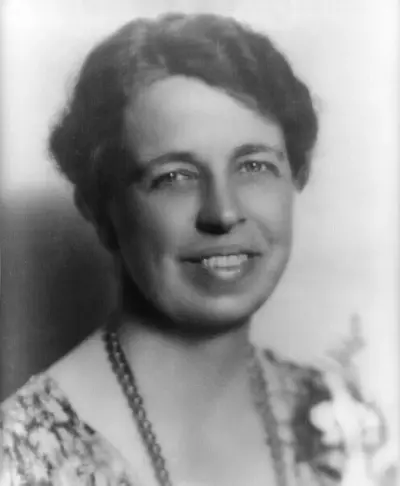
Anna Eleanor Roosevelt was an American political figure, diplomat and activist. She served as the First Lady of the United States from March 4, 1933, to April 12, 1945, during her husband President Franklin D. Roosevelt's four terms in office, making her the longest-serving First Lady of the United States. Roosevelt served as United States Delegate to the United Nations General Assembly from 1945 to 1952. President Harry S. Truman later called her the "First Lady of the World" in tribute to her human rights achievements.
