Vallabhbhai Patel Quotes
No one would die of starvation in independent India. Its grain would not be exported. Cloth would not be imported by it. Its leaders would neither use a foreign language nor rule from a remote place …. Its military expenditure would not be heavy. Its army would not subjugate its own people or other lands. Its best-paid officials would not earn a great deal more than its lowest-paid servants. And finding justice in it would be neither costly nor difficult
Vallabhbhai Patel, 1875–1950, President, Indian National Congress, Presidential address to the Congress, 1931
Sourced by: Eigen's Political and Historical Quotations


He persuaded many other rulers to join the Indian Union when India became Independent.

Some in the military and state department were distressed by this writing. England was our major WWII ally. We were fighting, side by side with soldiers of many of the colonies of the British Empire. Some nationalists in India were urging non-cooperation in the Allied war effort. Most American leaders adopted the policy of holding our differences with our allies (England, China & Russia) until after the war was won. However, Mrs. Roosevelt, was more outspoken than most other public officials.

In the negotiations the Indian nationalists of the Congress Party did not get everything that they wanted. Rarely does anyone in legitimate negotiations. This was a masterful example of oratory where Nehru wanted to produce the euphoria and historical gravitas that was appropriate when the largest group of people in world history gained self-government and independence. Yet the Congress Party had made promises in the platforms over the years that had not been kept. The partition of the one nation into a Muslim state as well as India denied the Indians of some of their historically and economically most important territories and he had to acknowledge that failure without dampening the public enthusiasm for the great achievement. This was a masterpiece.


Turkey under the Ottomans had been an imperialist, expansionist, empire, fighting and ruling over half of Europe and all of the Middle East. Ataturk argued that fighting and taking casualties should only take place to protect the nation’s independence and not to build or maintain an empire.

British colonial economics imported raw materials to England which then exported them back to the colonies as manufactured goods. Gandhi correctly calculated that by minimizing purchase of English cloth, colonial control of India would not be as profitable. Gandhi not only called for the boycott, but called on Indians to spin their own cloth, set an example be spinning himself, and his Congress party adopted the spinning wheel as its logo and symbol which continues today. Narcotics, was at the time not only legal, but British economic interests controlled much of the world narcotics trade. Gandhi’s call for a boycott of narcotics was as much an economic tactic as it was a health measure.

“Musalmans” was then another English term for Muslims. At the time, the Hindus and Muslims of India were both under the rule of the British. As bad as Colonial Rule was, it had some advantages for the subjects and their desire to reform government and education. Ironically, there is no Islamic nation today, with the exception of Turkey, where Muslims have the rights, freedom and privileges as they had at the turn of the century in Colonial India.
The power structure of England and the English administrators of South Africa were strong advocates of racial equality at the beginning of the 19th century. They insisted on equal administration of law. However the Boer white population could think of nothing more absurd. In a sense the Boers were much like the Southern Whites at the same time. The South African government however could not enforce its equality policies in the rural area – the majority of South Africa at the time. When democracy and self rule came to South Africa, the racially moderating force of the English was minimized and the majority of South Africans wanted a racially segregated society. Apartheid resulted.


Earlier in the Arab-Israeli conflict United Nations troops were stationed at the borders to prevent either side from attacking the other. The Arabs mounted a major attack and the United Nations troops ran and did not fight. Ever since then, Israel policy was never to depend on any other than Israel to defend the country and the people.


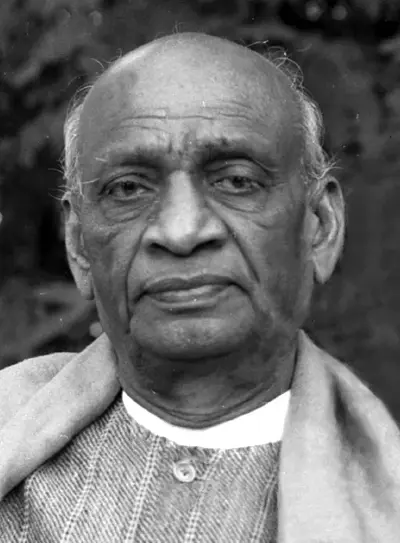
Sardar Vallabhbhai Jhaverbhai Patel, popularly known as Sardar Patel, was an Indian statesman. He served as the first Deputy Prime Minister of India. He was an Indian barrister, and a senior leader of the Indian National Congress who played a leading role in the country's struggle for independence and guided its integration into a united, independent nation. He was one of the conservative members of the Indian National Congress. In India and elsewhere, he was often called Sardar, meaning "chief" in Hindi, Urdu, and Persian. He acted as Home Minister during the political integration of India and the Indo-Pakistani War of 1947.
