John Stuart Mill Quotes
No longer enslaved or made dependent by force of law, the great majority are so by force of property; they are still chained to a place, to an occupation, and to conformity with the will of an employer, and debarred by the accident of birth to both the enjoyments, and from the mental and moral advantages, which others inherit without exertion and independently of desert. That this is an evil equal to almost any of those against which mankind have hitherto struggles, the poor are not wrong in believing.
Mill, John Stuart. "Chapters on Socialism." The Fortnightly Review, 1879.


Jefferson was one of the first political and economic thinkers to express concern over the “wage slave” concept of the industrial revolution. This was one of the major reasons that he was not in consonance with Alexander Hamilton in his economic vision for America. While we followed the Hamilton direction, there are still issues of maintaining freedom and independence for an employee in modern nations and economies.

Sinclair had written an expose of the meat packing industry – the Jungle – which used as its setting the Armour meat packing factory. It changed the way the public thought about the industry, the role of government and regulation. President Roosevelt took up the reform role, and got Congress to Regulate the quality and cleanliness of the meat packing industry. Sinclair, however not only wanted that reform, but also wanted the labor wages and conditions reformed. He referred to the Armour plant as the fortress.


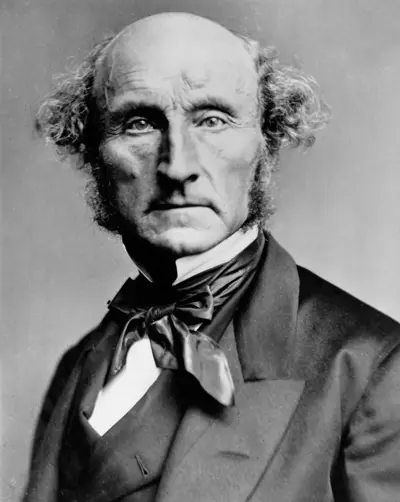
John Stuart Mill, usually cited as J. S. Mill, was an English philosopher, political economist, Member of Parliament, and civil servant. One of the most influential thinkers in the history of classical liberalism, he contributed widely to social theory, political theory, and political economy. Dubbed "the most influential English-speaking philosopher of the nineteenth century", he conceived of liberty as justifying the freedom of the individual in opposition to unlimited state and social control.
