Ronald Fisher Quotes
No isolated experiment, however significant in itself, can suffice for the experimental demonstration of any natural phenomenon; for the "one chance in a million" will undoubtedly occur, with no less and no more than its appropriate frequency, however surprised we may be that it should occur to us.
Fisher, Ronald A. The Design of Experiments. Oliver and Boyd, 1935, p. 14.


Historically, in the first half of the 20th century, nuclear scientists discovered that probability governed and was necessary for understanding quantum mechanics—the laws of physics governing tiny objects like atoms, electrons, protons and even quarks. To many, this seemed a contradiction in that it was hard to conceive particles following laws and yet behaving randomly at the same time. However, it did not take long before all the scientists adjusted their thinking and learned to live and work with that was then a type of contradiction but is no longer thought so as men and women have learned to think in a new way. This quotation illustrates that the greatest scientists in the world, in a very short period of time, had to change their entire mode of thinking. There were no real holdouts or “conservatives” who wanted to maintain the older values. This would never happen in politics, where change is not accepted very quickly.

Politicians, like many other people, often confuse correlation with causality as few have studied or understand the mathematics of probability.


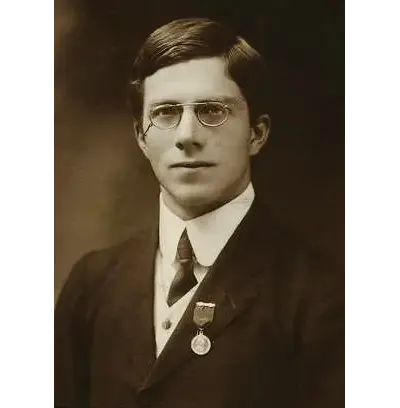
Sir Ronald Aylmer Fisher FRS was a British statistician, geneticist, and academic. For his work in statistics, he has been described as "a genius who almost single-handedly created the foundations for modern statistical science" and "the single most important figure in 20th century statistics". In genetics, his work used mathematics to combine Mendelian genetics and natural selection; this contributed to the revival of Darwinism in the early 20th-century revision of the theory of evolution known as the modern synthesis. For his contributions to biology, Fisher has been called "the greatest of Darwin’s successors".
