Robert Nozick Quotes
The fact that we don't keep repeating tests in the same arena is not because the probability of the hypothesis showing its falsity in other arenas goes up after it has passed tests in one arena.
Nozick, Robert. Invariances: The Structure of the Objective World. Harvard University Press, 2001.


The mathematics of modern statistical analysis are excellent, but there are many ways to end up with invalid results by making important errors in gathering the numbers which are then used to calculate the statistics. Often the sample is inadvertently or intentionally biased. Sometimes it is incomplete. Very frequently, the measures do not measure well what someone says they do measure. There are many other ways to mess up a statistical analysis, and is it those critical processes details that Gomez Hurtado tells us all to be worried about. He uses the analogy of blood sausage, which tastes delicious can be made with unsavory and unhealthy ingredients sometimes, and even when made right is a bit shocking to most people to watch the process.

Historically, in the first half of the 20th century, nuclear scientists discovered that probability governed and was necessary for understanding quantum mechanics—the laws of physics governing tiny objects like atoms, electrons, protons and even quarks. To many, this seemed a contradiction in that it was hard to conceive particles following laws and yet behaving randomly at the same time. However, it did not take long before all the scientists adjusted their thinking and learned to live and work with that was then a type of contradiction but is no longer thought so as men and women have learned to think in a new way. This quotation illustrates that the greatest scientists in the world, in a very short period of time, had to change their entire mode of thinking. There were no real holdouts or “conservatives” who wanted to maintain the older values. This would never happen in politics, where change is not accepted very quickly.

Politicians, like many other people, often confuse correlation with causality as few have studied or understand the mathematics of probability.


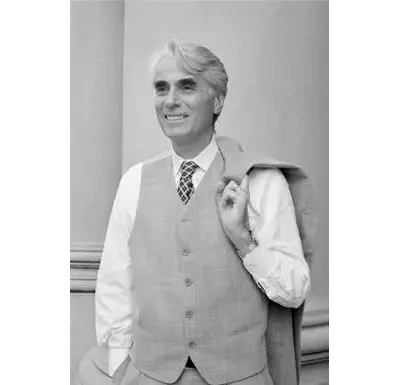
Robert Nozick was an American philosopher. He held the Joseph Pellegrino University Professorship at Harvard University, and was president of the American Philosophical Association. He is best known for his books Philosophical Explanations (1981), which included his counterfactual theory of knowledge, and Anarchy, State, and Utopia (1974), a libertarian answer to John Rawls' A Theory of Justice (1971), in which Nozick also presented his own theory of utopia as one in which people can freely choose the rules of the society they enter into. His other work involved ethics, decision theory, philosophy of mind, metaphysics and epistemology. His final work before his death, Invariances (2001), introduced his theory of evolutionary cosmology, by which he argues invariances, and hence objectivity itself, emerged through evolution across possible worlds.
