Mark Fisher Quotes
No ideology better understands the need for enemies than neoconservatism, and when the cold war dramatically and unexpectedly ended, the way was prepared for the 'Arab threat' to emerge. 'True Lies,' the 1994 James Cameron comedy thriller starring Arnold Schwarzenegger, duly served up the Arab villain Salim Abu Aziz.
Fisher, Mark. k-punk: The Collected and Unpublished Writings of Mark Fisher (2004-2016). Repeater Books, 2018.


The 40 Committee was a secret committee of officials to deal with major national security covert operations possibilities. Chile had democratically elected Salvador Allende, a strong socialist, as President. He then, as he had promised in his campaign, begun to nationalize mining and other heavy industry and nationalized the very large farms. Kissinger and some others thought that Allende might probably transform Chile to communist state. The committee was discussing whether or not the United States should, via covert operations, try and destabilize or overthrow the Allende government. There was a strong minority aristocracy of the wealthy who would definitely support such an activity. Kissinger argued for intervention and some others observed that Allende had been fairly elected as a leftist by the people. Kissinger made this famous statement, and America covertly though the CIA worked with the Chilean right wing and fascists to overthrow Allende. The military, having been given the “green light” started attacking the Presidential Palace. Allende made a radio speech to the nation. A few hours later, the military seized the palace and reported that Allende had committed suicide.
Kissinger stating that the US should “correct” the election “mistakes” of other countries was of course Top Secret and the official US position was to support the right of any people to elect their preferred leaders. Normally, the public would never have seen the transcript of the meeting until many decades had passed but part of the transcript found their way to a manuscript of a book about the CIA. That agency went to the courts to block the publication and Kissinger’s statement. However, although the quote was removed from the book, enough people had now seen it, and the quote was leaked.
The quote is historically important for the real story of what really happened in Chile as General Pinochet who seized power turned out to be guilty of Crimes Against Humanity and Allende is today a national hero and martyr. In addition, it is a wonderful example of “overclassification”. After the action was completed, why should the American Public not know that its Secretary of State did not believe in democratic elections if the people would elect communists? --especially when the official stated policy he was presenting was just the opposite. The argument faded when the Watergate Scandal broke and consumed America’s attention.


who worked with the Communists. The Communists were to Flip-flop again when Russia needed arms and assistance to fight Hitler when the pact broke down. See {595773}


at the end of World War I 1st Earl Lloyd-George of Dwyfor

At the end of WWII there was much tension between Russia and the Anglo-American alliance. This plan was developed but never implemented. See {613195} for Prime Minister Winston Churchill’s description of the invasion idea.


The Communists under Mao won the Civil War easily as the Nationalists were not only corrupt and very unpopular, but they were not very interested in the welfare of the Chinese peasants. Further Chiang was a ruthless dictator. At the time there was great pressure for America to support any faction that was anti Communist regardless of how bad they were themselves. Davies and others who thought that we should have communications with the Communists who would soon control China, were viciously attacked by Senator McCarthy who accused Davies of “loosing China” and the Senator and some other Americans thought that the Nationalists could win the Civil War. We now know that they never had a chance, but at the time they did a very good job of promoting their cause and capability in the United States and especially in Washington. None the less, in the Red Scare, Davies was fired, only to thereafter be awarded the highest civilian award in the nation in recognition of his great and patriotic work.

In 1992 Russia was in terrible economic shape after the fall of the Soviet Union. Keeping up with the United States military expenditures had bankrupted the Russians. The United States which had strategically increased its defense spending to break the Russian economy if they tried to keep up. However, the U. S. expenditures had forced America into a deficit spending period which produced a national deficit greater than all the previous cumulative deficits in our history. So the American economy was not in great shape either. Meanwhile, Japan, whose constitution (imposed by America after WWII) forbade having a military and funding a military. The result was the Japanese economy was growing at a much more rapid rate, and did not have the unbalanced budget of the United States and Russia. Hence, Tsongas’ observation.

The Red Scare had already reached most conservatives and Truman and most others had not yet been affected by the fear of Communism that so many people had through the 1970s.


He finally had to. In the government of national reconciliation, the Fascists—called Conservatives after WWII—were led by Don Manuel and he took the second place while the Republicans with the majority had the Prime Ministership. The Communists were part of the Republican coalition as they had been in the Civil War.


Alabama and Mississippi were not the only states which not only tolerated but mandated segregation. All the Southern States did. But these two were the worst offenders.
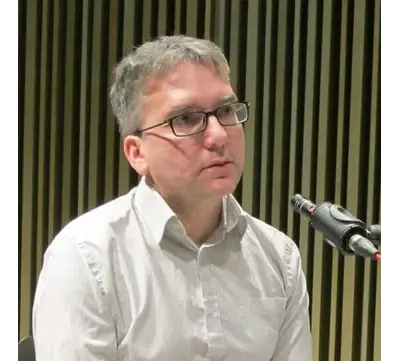
Mark Fisher, also known under his blogging alias k-punk, was a British writer, music critic, cultural theorist, philosopher and teacher based in the Department of Visual Cultures at Goldsmiths, University of London. He initially achieved acclaim for his blogging as k-punk in the early 2000s, and was known for his writing on radical politics, music, and popular culture.
