Marquis de Lafayette Quotes
Never was a man further from a partiality for Spain than I am. But I think I now have left them in a sincere and steady intention to cultivate the friendship of America.
Lafayette, Marie Joseph Paul Yves Roch Gilbert Du Motier. Memoirs, Correspondence and Manuscripts of General Lafayette. Vol. 2, Saunders and Otley, 1837.


The Conclusion of the Russo-Japanese War. The treaty was negotiated and signed in Portsmouth New Hampshire. President Theodore Roosevelt was awarded the Nobel Peace Prize for his mediating efforts. The language was typical of a peace treaty where just before its signature the two nations and their emperors were vilifying and dehumanizing the other.
The Iroquois had a very successful confederacy of 6 tribes in a relatively democratic government with a written constitution. They dominated the Eastern part of North America for years. The were able to maintain a permanent unity with a unified and decentralized combination of government—much like the United States would become. At the time of this advice, each American colony was a government unto itself. The three Iroquois Indian delegates were Canassatego, Tachanoontia, and Gachradodow.


Article 9 of the 1946 Japanese constitution that was imposed on Japan {604739} severely limited Japan’s military. Emperor Hirohito asked privately how Japan would be protected.


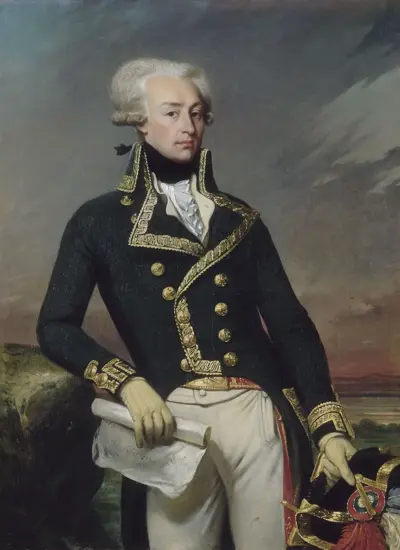
Marie-Joseph Paul Yves Roch Gilbert du Motier, Marquis de La Fayette, known in the United States as Lafayette (/ˌlɑːfiːˈɛt, ˌlæf-/, French: [lafajɛt]), was a French aristocrat and military officer who fought in the American Revolutionary War, commanding American troops in several battles, including the siege of Yorktown. After returning to France, he was a key figure in the French Revolution of 1789 and the July Revolution of 1830. He has been considered a national hero in both countries.
