Philip Morrison Quotes
Neither our oceans nor our radar nor our fighters can keep us intact through another major war.
Morrison, Philip. "If the Bomb Gets Out of Hand." One World or None: A Report to the Public on the Full Meaning of the Atomic Bomb, edited by Dexter Masters and Katharine Way, McGraw-Hill, 1946, p. 6.


Trieste was occupied by the British and Americans theoretically, but Tito’s Yugoslavian troops had done most of the WWII fighting and dying in the area and wanted control for the Russian Allies of which Tito was then one. There were frequent armed standoff’s of Anglo Americans and Yugoslav troops that could easily have evolved to full scale fighting. Nine months later, Tito broke with Stalin. An interesting historical fact is that Richard M. Nixon was one of the Congressional Delegation then visiting Trieste.


At that time there were extensive meetings and discussions for the creation of what was to be the United Nations. The negative view of the United Nations or other international security organization is now and always has been held by a vocal minority in the United States.


The CIA was supplying planes and pilots to assist anti-Government rebels in their efforts to overthrow Sukarno. Meanwhile, the Secretary of State and other American officials were insisting that America had no involvement in the Indonesian civil war. See {591337}.


Although Great Britain had abolished slavery, British economic interests during the Civil War suffered because of the northern blockade of the South. Much political opinion in England was hostile to the blockade policies of the Union. Bright, a great admirer and supporter of the United Sates and the Union cause was concerned that the United States might drift into War with Great Britain. His letter to Senator Sumner was written with the understanding that it would be in shared with President Lincoln, and it was actually read at a cabinet meeting.


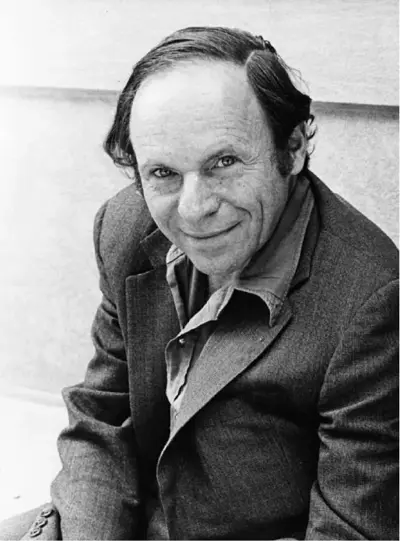
Philip Morrison was a professor of physics at the Massachusetts Institute of Technology (MIT). He is known for his work on the Manhattan Project during World War II, and for his later work in quantum physics, nuclear physics and high energy astrophysics.
