Hjalmar Branting Quotes
As a result of the World War and of a peace whose imperfections and risks are no longer denied by anyone, are we not even further away from the great aspirations and hopes for peace and fraternity than we were one or two decades ago?
Branting, Hjalmar. "Fraternity Among Nations." Nobel Lectures, Peace 1901-1925, edited by Frederick W. Haberman, Elsevier Publishing Company, 1972, pp. 325-333.


Although Great Britain had abolished slavery, British economic interests during the Civil War suffered because of the northern blockade of the South. Much political opinion in England was hostile to the blockade policies of the Union. Bright, a great admirer and supporter of the United Sates and the Union cause was concerned that the United States might drift into War with Great Britain. His letter to Senator Sumner was written with the understanding that it would be in shared with President Lincoln, and it was actually read at a cabinet meeting.


America, England, Germany and France Many Japanese leaders predicted war between the Great Powers while America and its European Allies did not see the danger as clearly. Shortly after 1936, Hitler began the Second World War. Japan was indeed prepared. Hiranuma became one of the Japanese extremists and after WWII was convicted of war crimes and given a life sentence.


3rd Earl Russell of Kingston. The military weak nations agreed with him, but the militarily strong ones did not—especially America and England which had the Atomic Bomb when others did not.


The CIA was supplying planes and pilots to assist anti-Government rebels in their efforts to overthrow Sukarno. Meanwhile, the Secretary of State and other American officials were insisting that America had no involvement in the Indonesian civil war. See {591337}.

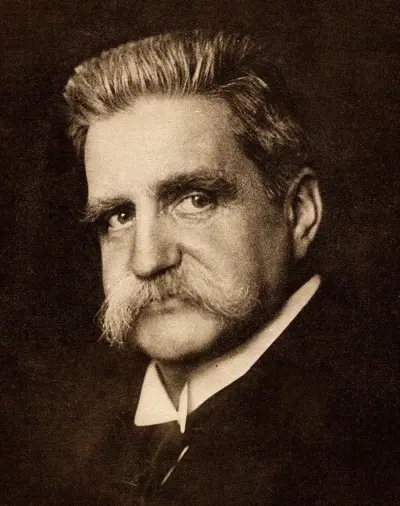
Karl Hjalmar Branting was a Swedish politician who was the leader of the Swedish Social Democratic Party (1907–1925) and Prime Minister during three separate periods (1920, 1921–1923 and 1924–1925). When Branting came to power in 1920, he was the first Social Democratic Prime Minister of Sweden. When taking office for a second term after the general election of 1921, he became the first socialist politician in Europe to do so following elections with universal suffrage. In 1921, Branting shared the Nobel Peace Prize with the Norwegian secretary-general of the Inter-Parliamentary Union Christian Lous Lange.
