William Pitt the Younger Quotes
Necessity is the plea for every infringement of human freedom. It is the argument of tyrants; it is the creed of slaves.
Elected at 24 as the youngest British Prime Minister. This is perhaps the most elegant statement on the problem in English history, but it was not the first. Oliver Cromwell had preceded him. See Oliver Cromwell’s succinct version earlier: {585597}.
William Pitt, 1759-1806, British Prime Minister, Speech on the India Bill, House of Commons, November 18, 1783
Sourced by: Eigen's Political and Historical Quotations

John Lackland, c. 1167-1216. Sealed under duress and later repudiated by the King with Papal assistance

Ironically, Cromwell himself had eloquently observed that “necessity” is the avowed justification of post politicians to justify their breaking the law or doing something that is immoral and wrong. See {632372}. Also see {57408}, {599566}. But the most eloquent statement was given by Prime Minister William Pitt: {585477}


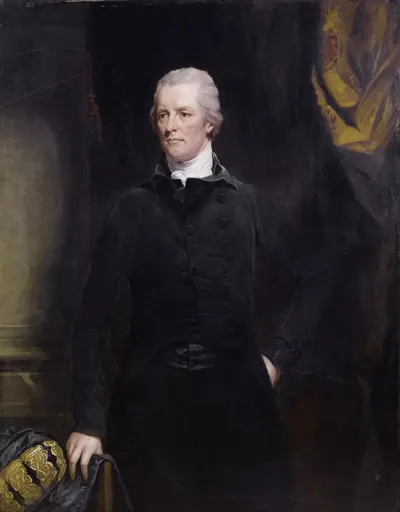
William Pitt the Younger was a prominent British Tory statesman of the late eighteenth and early nineteenth centuries. He became the youngest prime minister of Great Britain in 1783 at the age of 24 and the first prime minister of the United Kingdom of Great Britain and Ireland as of January 1801. He left office in March 1801, but served as prime minister again from 1804 until his death in 1806. He was also Chancellor of the Exchequer for all of his time as prime minister. He is known as "the Younger" to distinguish him from his father, William Pitt, 1st Earl of Chatham, who is customarily referred to as "William Pitt the Elder" (or less commonly, simply "Chatham") and had previously served as prime minister.
