Samuel Beckett Quotes
Mysterious affair, electricity.
Beckett, Samuel. Krapp's Last Tape and Other Dramatic Pieces. Grove Press, 1960, p. 18.


He was right about the pace of technological development, but we have yet to realize his prediction of inexhaustible power.

This declaration, drafted by Russell and Einstein two days before Einstein’s death was signed by a number of other prominent scientists.

Many of his greatest ideas were not sufficiently appreciated by many other scientists nor the businessmen who funded scientific projects then. Tesla was one of the great American immigrant scientists. He found in America the kind of intellectual and operational freedom that did not exist in the rigid, monarch-controlled, Austro-Hungarian Empire. He developed patents and techniques that formed the technological bases of radio, telephone long distance, TV, cell phones, Wi Fi, just to name a few. Most important he was Thomas Edison’s great nemesis. Edison invented DC electric generators that could power factories or entire streets in a neighborhood. Tesler invented and developed AC electrical technology which could power entire cities and he could move electricity over long distances which Edison could not. Tesler was one of the first scientists to conceive of and try to implement “Big Science” where there were huge capital investments to develop machines and systems to do what had never been done before—philosophically like the CERN Hadron Collider. Tesler even convinced a large corporation to finance the construction of a massive building and tower so he could experiment with the wireless transmission of electricity. However, as the industrial democracies have learned, Big Science can only be funded by governments and it often takes sever working in consort to afford the huge investment that is required. In Tesler’s era, the federal and state governments did not fund scientific research so his work was not only technically ahead of his time but also conceptually. He anticipated most of the problems and need for a national power grid that was challenging America even at the beginning of the 21st century.


Most environmentalists limit the vision of their solutions to using less of our precious natural resources which is very important but just as important and perhaps more so in the long run is increasing the supply of these resources. Food is an example. The major reason that there is no serious food shortage world-wide is that we have increased the productivity of agriculture requiring less labor, less water, less fertilizer, less land, and less dependency on weather. Distribution has also improved, but there is no very good way of distributing something for which there is a great shortage.
Nuclear fusion is different from nuclear fission that currently powers atomic power plants. Fusion is the process the sun uses to generate all its power. Scientists understand exactly how fusion works—it’s much simpler than fission, but actually creating a way of doing it on earth has been a very difficult challenge. The National Ignition Facility has been trying to produce a fusion reaction for a number of years with no success.

Under this initiative the US declassified and distributed technical, previously secret information, about atomic science to the world for scientific development. It has been very successful and there are few modern nations that have not benefitted from the program.


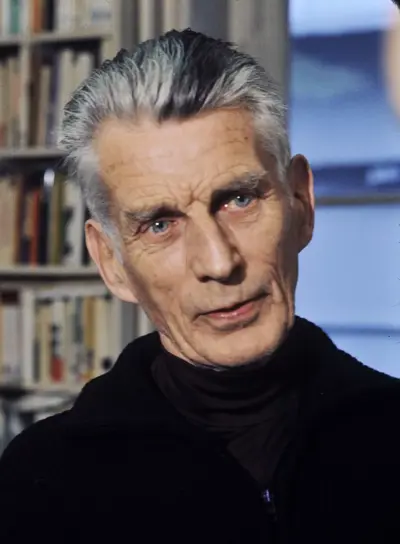
Samuel Barclay Beckett was an Irish novelist, playwright, short story writer, theatre director, poet, and literary translator. A resident of Paris for most of his adult life, he wrote in both French and English.
