Zachary Taylor Quotes
My life has been devoted to arms, yet I look upon war at all times, and under all circumstances, as a national calamity to be avoided if compatible with national honor.
Taylor, Zachary. "Letter to Captain J. S. Allison, September 4, 1848." Niles' National Register, vol. 74, 1848, p. 200.


Many in the House were calling on England to fulfill its treaty obligations and stop Hitler and the Germans from overrunning Europe. Prime Minister Chamberlain, kept trying to appease Hitler by giving in to some of his demands. The more he gave in, the greater the demands became. Maxton was one of the few members of Parliament who wanted to give the Prime Minister more time to avoid war. Chamberlain’s efforts failed miserably and Hitler already had a huge advantage.


This was the week after he returned from his meeting with Hitler in Munich where he appeased the German Dictator. See {585941} for his famous naive statement.


The only alternative is war or national dishonor; and between these two, what American can hesitate.
Canadian lumberjacks began operations on the Aroostook River area that was in dispute between Maine and Canada:


Bland was an expert in Asia and spent most of his time writing about Asian Politics. This quote shows that there was hostility and bad feeling between American and Japan long before WWII. This statement was written in 1921. The reality was that Japan was getting stronger as a militaristic expansionist nation which wanted to subjugate most of Asia. Ironically, they were using England and the European powers as models and sought to take Korea, Manchuria and much of Asia as Colonies, but this clashed with American values and even then there was animosity of the two systems.

His appeal was also in the name of concurring heads of state of Finland, Holland, Denmark, Norway, Luxemburg, and Sweden.


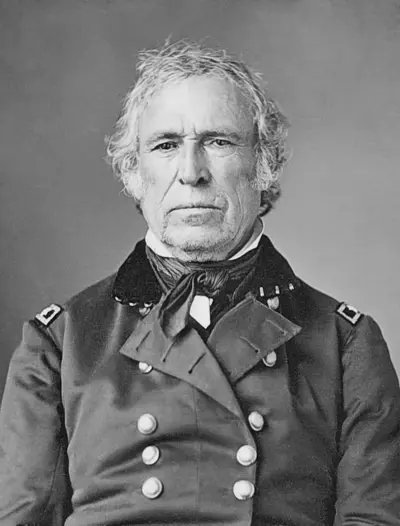
Zachary Taylor was an American military leader who served as the 12th president of the United States from 1849 until his death in 1850. Taylor previously was a career officer in the United States Army, rose to the rank of major general and became a national hero as a result of his victories in the Mexican–American War. As a result, he won election to the White House despite his vague political beliefs. His top priority as president was preserving the Union. He died sixteen months into his term, having made no progress on the most divisive issue in Congress, slavery.
