Hendrik Hertzberg Quotes
Most of us pay some sort of price for screwing up. Quayle never has. His high school guidance counselor told him his grades were too low for admission to DePauw University, where his grandfather was a trustee and major donor, but he got in anyway. In college he flunked the departmental exam that was supposed to be a prerequisite to graduation, but he graduated anyway. Although it was 1969, the height of the Vietnam War, a year when more than a quarter million young men were drafted and other Indianans were being told it would take years to get into the National Guard, Quayle landed a spot in a week flat, after a retired Guard general who worked for his family made a call on his behalf. Quayle was rejected by Indiana University Law School, but he got in anyway- under an affirmative action program, after he visited the dean of admissions, a Republican judge in a city (Indianapolis) where Quayle’s grandfather owned the newspaper. (Soon thereafter, the grandfather made a large contribution to the law school.) Quayle was indifferent law student, but he got a job in the state attorney general’s office anyway. (His father made a few calls.) He was a twenty-nine year old employee of his father’s paper, but he got elected to Congress anyway, with the help of the paper and his own good looks. He was a poor congressman, but he got elected to Senate anyway, in the 1980 Reagan landslide. Two years later the DePauw faculty voted against giving him an honorary degree, but he got it anyway. He was a mediocre senator, but Bush put him on the national ticket anyway. He blew the debate, but he’ll probably be elected vice president anyway. At this rate he’ll be president by cherry blossom time.
Hendrik Hertzberg, Staff Writer and Editor, The New Republic, October 31, 1988
Sourced by: Eigen's Political and Historical Quotations

Johnson was a tailor by occupation, and was frequently derided as unfit for high public office. Jefferson Davis, one of his detractors, came in for his share of reply invective.

The George W. Bush administration, violated the Civil Service Law and the traditions of the Justice Department by making hiring and assignment decisions on the basis of political ideology and participation. Making the situation worse, the political people who were put in senior positions of authority were often not very well qualified and far less so than the people they ended up supervising and outranking. The inspector general of the Justice Department, after being stonewalled, finally uncovered the mess and Monica Goodling, one of the worst offenders, was barred from ever working for the Justice Department again.


Most recent American Presidents have appointed their most senior officials who were of their own political party although FDR, Dwight Eisenhower and Barack Obama appointed members of the opposition party to several important posts. However, in the Soviet Union, the senior officials would appoint no one to even a minor post who they did not perceive was politically reliable—was a dedicated communist and supported the views and programs of the Russian Communist Party leadership. However, rarely in America has there been any criteria of political or ideological doctrine in the hiring of staff. The George W, Bush Administration was a dramatic exception. Being a loyal Republican was totally insufficient. New officials had to be politically and philosophically consonant with the very conservative wing of the Republican party. This was bad enough but by following the same approach as the Russians and other ideological countries, the Bush administration had many of the same problems. One dramatic one was the hiring of people with no professional experience or qualifications but were ideologically perfect and totally loyal. One very dramatic example was the man appointed to head the Federal Emergency Management Administration. His experience consisted of managing horse shows and he had never had anything to do with natural disasters or any other kinds of emergencies nor did he have any experience with first responders. Another is the man appointed to set up the Stock Exchange for Iraq after we occupied that country and were involved in nation building. The appointee’s only job experience had been as a White House intern and not only knew nothing about Stock Exchanges or Economics, but had no business experience as he never held any other job. There were many such examples. No other administration in modern times—Democratic or Republican—went to such lengths as the Soviets to maintain ideological purity.


Before Governor Mecham was impeached, Senator John McCain called for his resignation. After Mecham was impeached for misusing State funds and thwarting investigations of death threats, he commented upon McCain's qualifications for a place on the Republican national ticket:


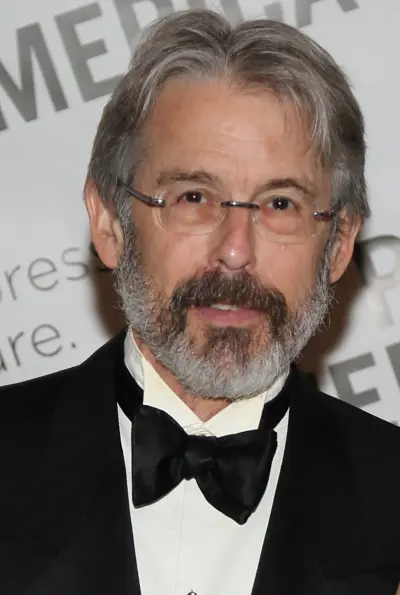
Hendrik Hertzberg (born 1943) is an American journalist, best known as the principal political commentator for The New Yorker magazine. He has also been a speechwriter for President Jimmy Carter and editor of The New Republic, and is the author of ¡Obámanos! The Rise of a New Political Era and Politics: Observations & Arguments. In 2009, Forbes named Hertzberg one of the "25 Most Influential Liberals in the U.S. Media," placing him at number seventeen.
