Henry A. Wallace Quotes
Most American fascists are enthusiastically supporting the war effort. They are doing this even in those cases where they hope to have profitable connections with German chemical firms after the war ends.
Wallace, Henry A. "The Danger of American Fascism." The New York Times, 9 Apr. 1944, p. SM4.


The suffragette movement was split by WWI and the issue of pacicism. See {621265} for the pro war factional view.

declared against the United States by Barbary Algeria


American Communist Party Newspaper. The communists were so supportive of the war effort that they were often unconditional defenders of the Roosevelt Administration’s war program. Most communists suspended their advocacy of labor strikes and Black enfranchisement during the war because it would ultimately lead to the weakening of the Allied efforts against the Nazis. Programs such as the “March on Washington Movement” were seen as untimely and therefore subversive and fascist. For more communist criticism of attempts during this period to further civil rights see {603312}


The Copperheads were the Northern pro-South and anti-war faction of the Civil War.


stating that war was obsolete See {640087} for the quotation of exactly what Angell wrote.

Some major celibrities like Charles Lindbergh were admirers of Hitler and other fascist leaders. There were even some American Fascist Organizations that overtly supported Hitler and Mussolini.


Many notables of the left and the right supported Mussolini in his early political days. Virtually all of the worst dictators were welcomed by many when they first appeared on the scene. Human nature seems to have us all looking for exceptional leaders and statesmen and that is exactly what the dictator relies upon to acquire power, By the time most recognize the truth, the dictator has control of all the levers of compulsion. Many Americans were fooled just as the Europeans were. For others, see {623202}. {623200} and {623201}.

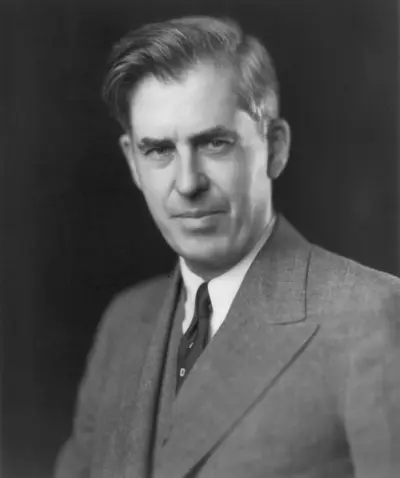
Henry Agard Wallace was an American politician, journalist, farmer and businessman who served as the 33rd vice president of the United States, as well as the 11th U.S. Secretary of Agriculture and the 10th U.S. Secretary of Commerce. He was also the presidential nominee of the left-wing Progressive Party in the 1948 election.
