Theodore Roosevelt Quotes
La Follette is the Grand American neo-Copperhead ... at the moment loyally serving one country—Germany.
The Copperheads were the Northern pro-South and anti-war faction of the Civil War.
Theodore Roosevelt, 1858-1919, 26th President of the United States (Republican, NY), Statement, 1917
Sourced by: Eigen's Political and Historical Quotations

He was an ally of the Ku Klux Klan and shared their vision of a binary moral and ethical world. There was no room for critics of the war effort.

This quotation shows American tolerance and freedom of speech even for our head of state.

The America First Committee consisted of right wing Americans who admired the fascist states of Nazi Germany and Italy. They were very anti-English and wanted the USA to have an alliance with Hitler against England and above all to not support England in the Second World War. Once Hitler declared war on the United States, the absurdity and danger of the American First groups became clear. A few changed their minds, but most remained ultra right wing fascists. They were a public group and under surveillance by the FBI so they never participated in any sabotage or successful spying for the enemy. Ironically, the organization with the most patriotic sounding name was so disloyal and in support of those who warred on America. Great Britain had an equivalent organization arguing for England to support Germany and let Hitler control Europe.


Ford was a great admirer of Adolf Hitler who thought Ford was the greatest of the Americans. He was an inveterate Fascist—racism and all. He vehemently opposed United States entry into WWII against the Nazis. He was awarded a medal by Hitler, and he had no qualms about taking it.


Many Republicans in the early 21st century signed a “no new tax” pledge to Grover Norquist, a Republican Party Boss, which he kept in his personal safe. However, many criticized the practice in that the private party pledge could easily conflict with the Oath the legislators took to the Constitution.


“Lord Haw Haw” was the name that he used in his propaganda broadcasts from Germany to England. Despite the fact that the broadcasts were anti-British and pro German, many in Britain listened to him regularly. He was very witty and many of his criticisms of British society were views held by many patriots in Britain. As pure entertainment, he was better than most of the BBC broadcasts during WWII. At the end of the war, Joyce was captured, tried and executed for treason.

His wife also had a Doctorate in Chemistry—the 2nd woman to achieve that in Germany—and she was distraught that he had been the leading scientist developing not only the poison gas which the Germans introduced in WWI, but he also developed the tactics of use and personally went to the battlefield and supervised the first major gas attacks. This was much against the ethical value of most scientists and Jewish ethics in particular. Haber had been a close colleague of Albert Einstein and the Kaiser Wilhelm Institute, and while Einstein was trying to get scientists to sign a petition against the war, Haber was developing the first weapon of mass destruction. After Haber gave this response to his wife, we left to go to the front to supervise another major gas attack. His wife committed suicide. Haber, while a German national hero to militaristic Germany, never again had the kind of pre-war relationship that existed with Einstein and many other fellow scientists.


He had been asked about the so called American “atrocities” for the bombing of North Vietnam targets. For this response Denton was tortured even more than he had been before which he disclosed on the television by blinking his eyes in Morse Code spelling TORTURE.

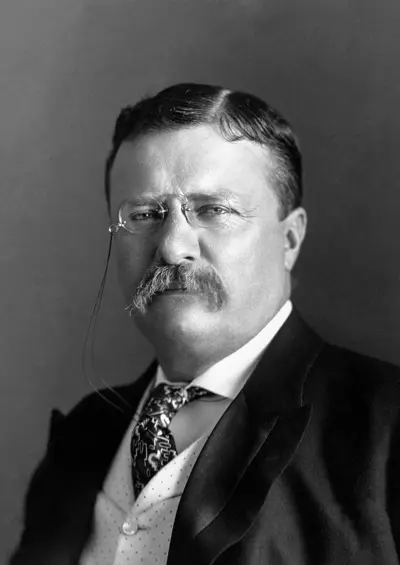
Theodore Roosevelt Jr., often referred to as Teddy or his initials T. R., was an American statesman, conservationist, naturalist, historian, and writer, who served as the 26th president of the United States from 1901 to 1909. He previously served as 33rd governor of New York from 1899 to 1900 and the 25th vice president of the United States from March to September 1901. Roosevelt emerged as a leader of the Republican Party and became a driving force for anti-trust and Progressive policies.
