Benjamin William Arnett Quotes
More than half the illiteracy of the whole nation is in the South, who where are found a little more than one-fourth of the nation's white population. The church never faced a graver responsibility than the work of giving Christian culture to the illiterate white millions of the South, and the A.M.E. Church is doing for the colored what the M.E. Church is doing for the whites in the North.
Arnett saw that the fate of the Black in the South was inextricably connected to that of the Southern white, most of whom were illiterate like the Blacks.
Benjamin William Arnett, 1838-1906, African Methodist Episcopal Bishop of South Carolina and Georgia, Annual address delivered before the faculty, students and friends of Claflin University and the Claflin College of Agriculture and Mechanical Institute, May 22, 1889
Sourced by: Eigen's Political and Historical Quotations


Throughout the Jim Crowe era of the South, the Southern whites were the poorest Americans with the exception of the Blacks, with few economic and cultural opportunities compared with the rest of the nation, the schools were the weakest of any area of the nation, the universities behind, and politically even whites had few choices with single party (Democratic Party) rule. While desegregation was fought tooth and nail by most white Southerners, it had the effect of elevating all phases of Southern life go that the gap between the South and the rest of the country diminished considerably. But the Blacks were also freed from the evil system and that was the “price” to the whites to which Baldwin referred.

Incredibly enough, after the Civil War and emancipation, most Virginia leaders opposed any form of rights for Blacks with one of the major reasons being that they were ignorant and uneducated. It was actually a crime to teach even a free Black to read.

Northern laborers, especially the new Irish immigrants, were fearful of the prospect of competing for jobs with freed Negroes who they perceived would flock to the North. That is what happened but a century later. The blanket assumption that the South was pro slavery was also not accurate. Different sociologies and economics produced different attitudes in communities throughout the South and some were inclined to abolition as Rankin’s history demonstrates.


When the first Southern States seceded, each appointed a whose job it was to persuade the other Southern States to also secede. In this case Hale was marketing secession to Kentucky which with Maryland were the only two Southern States to reject what they regarded as treason and rebellion. The importance of the quotation however is in his argument which was all based on enmity to racial equality and abolition. Later Southern apologists would argue that the Civil War was fought, not about slavery and racism butt about different philosophies of government. See {623715} .

This quotation has been one that has been used to argue against Black and other minority racism as well as white racism.


In 1831 a slave preacher, Nat Turner, led a rebellion in North Carolina killing over 50 whites. Even though Turner and the rebels were captured and executed, whites throughout the South, took vengeance on any slaves they could find. This description was of a North Carolina community.


The governor had initiated a study of the implementation of the death penalty in Maryland.

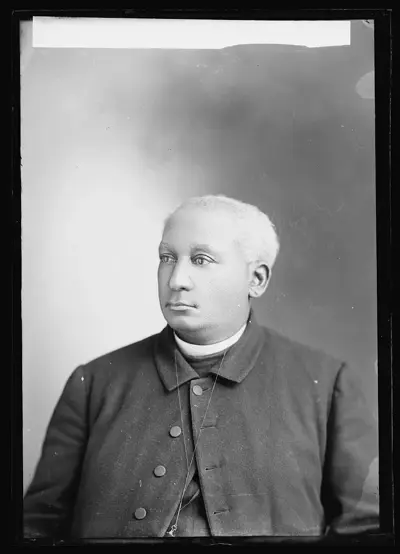
Benjamin William Arnett was an American educator, minister, bishop and member of the Ohio House of Representatives.
