Russell Kirk Quotes
Moral decay first hampers and then strangles honest government, regular commerce, and even the ability to take genuine pleasure in the goods of this world. Compulsion is applied from above as self-discipline relaxes below, and the last liberties expire under the weight of a unitary state.... Since religion has lost its empire over the souls of men, the most prominent boundary that divided good from evil is overthrown; kings and nations are guided by chance and none can say where are the natural limits of despotism and the bound of license.
Kirk, Russell. The Conservative Mind: From Burke to Santayana. Henry Regnery Company, 1953, p. 55.


Power tends to corrupt, and absolute power corrupts absolutely. Great men are almost always bad men.
Perhaps the most famous quotation in all of Political Science is this one. What is fascinating is that 74 years earlier, Shelly, the most famous of the English Poets expressed the same idea in one of his great poems. See {627920}. The last sentence of this quote is often excluded.


Honore Gabriel Victor Requiti. The French King had just opened the French National Assembly which contained deputies (delegates) from the clergy, the nobility and the people. The King had made what some deputies thought was a very constructive and responsible speech opening the assembly. Mirabeau observed that as long as there was an absolute monarch in place, even a benign one. It was the presence of a monarch itself that was evil.


Bartolo was the most famous legal expert of his day and for many years thereafter as he died at the age of 44—the height of his career. In Italy, Spain and other nations of Europe there were statutes passed that said if there was no precedent in Roman Law, the writings of Bartolo should dictate the law.

This is a very important quotation. It explains in great part, why there have been so few internal revolutions in Muslim countries. Al-Ghazi’s interpretation of Islamic Law and Theology concluded that even if the ruler is incompetent, corrupt, or destructive he should be supported and obeyed by all good Muslim citizens. The reason was that anarchy and/or chaos was an evil much worse for the Islamic community. There was one exception in the case of a ruler who was blasphemous or did not follow Islam. Then it was the duty of good Muslims. Since then, the ruler of an Islamic state, first seeks to ingratiated himself with the clergy. In Saudi Arabia, for example, the Royal Family gives enormous sums to all the clerics. They then urge dissidents and would be revolutionaries to accept the Royal Family with its flaws and shortcomings and accept their lack of freedom and human rights. And they tell all that the King and his family are all religious and support Islam. Therefore any revolt would be a tantamount to a sin. The Christian world had a different technique for inhibiting Revolution. Christian rulers claimed the Devine Right of Kings—that God had selected and ordained the king to lead. Regime change was contrary to the word of God. In a sense, the Islamic approach is more intellectually honest and seems to have worked much better than the Christians who have had so many revolutions. Better that is from the rulers point of view. From a democratic, Jeffersonian point of view revolting against an evil ruler was almost a moral obligation, and Al-Ghazali’s principle is all wrong and is keeping the Muslim countries from reaching democracy.


This quotation was extremely damaging to Russian Communism at the time. Goldman had been extremely supportive of the initial Russian Revolution and was an enthusiastic Marxist. She was not the typical conservative who would attack the revolution no matter what the outcome.
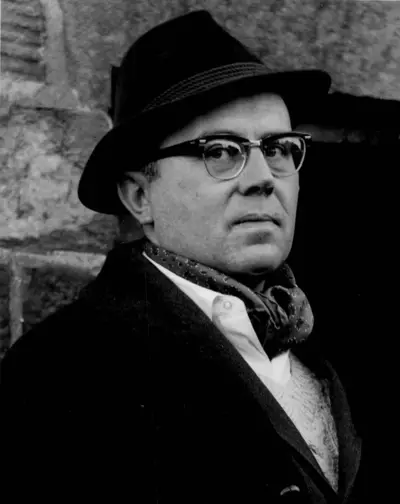
Russell Amos Kirk was an American political theorist, moralist, historian, social critic, and literary critic, known for his influence on 20th-century American conservatism. His 1953 book The Conservative Mind gave shape to the postwar conservative movement in the U.S. It traced the development of conservative thought in the Anglo-American tradition, giving special importance to the ideas of Edmund Burke. Kirk was considered the chief proponent of traditionalist conservatism. He was also an accomplished author of Gothic and ghost story fiction.
