Francis Lieber Quotes
Men, or squads of men, who commit hostilities, whether by fighting, or inroads for destruction or plunder, or by raids of any kind, without commission, without being part and portion of the organized hostile army, and without sharing continuously in the war, but who do so with intermitting returns to their homes and avocations, or with the occasional assumption of the semblance of peaceful pursuits, divesting themselves of the character or appearance of soldiers - such men, or squads of men, are not public enemies, and, therefore, if captured, are not entitled to the privileges of prisoners of war, but shall be treated summarily as highway robbers or pirates.
Lieber was assigned by President Lincoln to study the then international laws of war and prepare a manual for the guidance of union troops in the Civil War. Lincoln then issued the document as a general order. This particular article is particularly relevant to the modern war on terrorism where there is criticism of the treatment of captured terrorists. There are some who argue that they should be treated as prisoners of war. However, under the principles of this article, they specifically ought not to be so treated. Incidentally, highway robbers and pirates at the time were hanged.
Francis Lieber, 1800-1872, Historian, Publicist, & Political Economist, Abraham Lincoln, 1809-1865, 16th President of the United States (Republican, IL), Article 92, General Orders No. 100, Instructions for the Government of Armies of The United States in The Field, April 24, 1863
Sourced by: Eigen's Political and Historical Quotations

Defending torture and other violations of civil rights by the Secret Service during the Civil War:


As influential and revered as he was, Houston would not overcome the drive for secession by the wealthy, large, slave holders of Texas.

Confederate General Wheeler had introduced a new tactic of mining the roads with improvised explosive devices which took their toll on Sherman’s troops. At the time, this was against the ruled of war. Sherman ordered a few Confederate prisoners to the front and required them to walk ahead of his troops and demine the roads. He then allowed some of the prisoners to return to General Wheeler with a note from Sherman, explaining that if the Confederates persisted in this unethical form of warfare he would march all of the Confederate prisoners in the front of the troops and force them do remove the explosives by hand regardless of the danger. Wheeler never planted land mines again.


At the time 18 year old Douglas wanted to enlist to fight in the Philippines where his father was about to be given military command. Young Douglas took his father’s prescient advice and attended West Point instead. In an amazing historical precursor, General Arthur MacArthur ended up in policy disputes with the President over how aggressive American tactics should be. President Taft relieved MacArthur of his command.

In the earliest prediction of the World War II conflict between America and Japan:

When the Union army began using Blacks as recruits, the South threatened to execute any Negro soldier they captured. Some Southerners opposed execution but favored enslavement of captured Northern Black soldiers. The Lincoln threat seems to have worked, although Lincoln opposed executing Southern officers in retaliation for the atrocities at southern prisoner of war camps
The principle summarized in Article 5 was then and still is a good summary of collective international law on the subject. It is precisely this principle which had guided nations from America trying to preserve the Union to Israel trying to preserve its nation.


The Army actually violated the laws of West Virginia as well as the Constitutional rights of thousands of people. The justification was that there was a labor dispute in the West Virginia mines and there had been some violence. Capt. Morgan was one of three military officers of a military court which actually took over and assumed absolute control of the strike district. They army broke many more laws than they enforced.
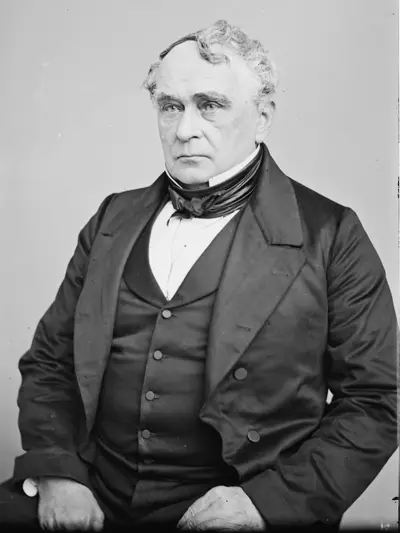
Francis Lieber, known as Franz Lieber in Germany, was a German-American jurist, gymnast and political philosopher. He edited an Encyclopaedia Americana. He was the author of the Lieber Code during the American Civil War, also known as Code for the Government of Armies in the Field (1863). The Lieber Code is considered the first document to comprehensively outline rules regulating the conduct of war, and laid the foundation for the Geneva Conventions.
