Charles Morgan Quotes
We considered that the strike district was in a state of actual warfare and we acted according to the procedure of the United States Army in time of war …. during the state of insurrection which prevailed, the constitution of the state of West Virginia was suspended by the acts of those men who were burning, killing and destroying property. We believed that to perpetuate the state of West Virginia and restore the constitution we had to use extreme measures.
The Army actually violated the laws of West Virginia as well as the Constitutional rights of thousands of people. The justification was that there was a labor dispute in the West Virginia mines and there had been some violence. Capt. Morgan was one of three military officers of a military court which actually took over and assumed absolute control of the strike district. They army broke many more laws than they enforced.
Charles Morgan, *, U. S. Army Attorney and Captain, Congressional Testimony explaining why the Army took over 150 sq miles of West Virginia, arrested, tried, convicted, and sentenced to jail civilians without allowing them any recourse to civilian courts, state or federal or any of their Constitutional Rights, 1914
Sourced by: Eigen's Political and Historical Quotations


There is a , romantic American myth about the Militiamen in Colonial and Revolutionary America—the citizen soldiers who would leave their farms and rise to the military necessity of the day. However, not only were the militia very hard to muster to duty, but most actually didn’t own or have experience with firearms, and the prevailing opinion of knowledgeable military leaders from George Washington on down was that the militia were not very good soldiers. See {613015}, {613016}, {613022}, {613027}, {621987}, {621988}, {613030}, {613033}, & {613056}


He had no authority to do this. He just took it upon himself. This was one of the incidents which caused later Congresses to pass very strict laws limiting the authority of all Federal Military and other intelligence and police forces so that they have little or no authority within the United States. President Lincoln did not allow the order to stand, although he repudiated it very delicately and as privately as possible. Many in his own party strongly favored this proclamation as it cracked down on the Southern Rebels and emancipated slaves—both objectives of many Republicans. In addition, Fremont was very popular with the people and had strong political connections. (He would later run for President.) See {635739}.

The Civil War was on.

He had secretly asked the United States to send American troops back to Cuba to help keep law and order as the Cubans could not nor could they govern the polarized society that had been festering under incompetent Spanish rule. President Roosevelt was furious that the Cubans could not govern the country. See {640520}.


This general perception led the Founding Fathers to place profound restrictions on the allowable role of the military in national law enforcement—a condition that exists to this day.


Lieber was assigned by President Lincoln to study the then international laws of war and prepare a manual for the guidance of union troops in the Civil War. Lincoln then issued the document as a general order. This particular article is particularly relevant to the modern war on terrorism where there is criticism of the treatment of captured terrorists. There are some who argue that they should be treated as prisoners of war. However, under the principles of this article, they specifically ought not to be so treated. Incidentally, highway robbers and pirates at the time were hanged.


With martial law came the authority to seize ALL guns in the colony for the emergency. This was not to disarm the general populace. It reflected the fact that there were relatively few colonists who owned guns as they were very expensive. The Governor could take those that existed and use them to defend against the rebels or whatever. There were more gun owners in the Revolution but still a minority. Even after the War of 1812 only 30% of Americans were armed, and that shortly decreased to 10% as there was no real culture of gun ownership in early America. This would come around the Civil War.
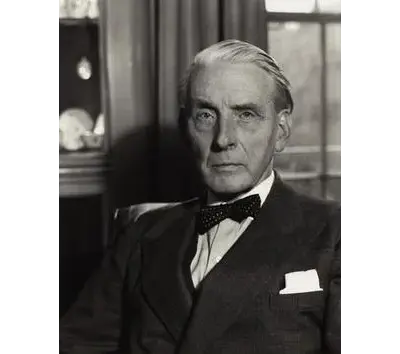
Charles Langbridge Morgan was a British playwright and novelist of English and Welsh parentage. The main themes of his work were, as he himself put it, "Art, Love, and Death", and the relation between them. Themes of individual novels range from the paradoxes of freedom (The Voyage, The River Line), through passionate love seen from within (Portrait in a Mirror) and without (A Breeze of Morning), to the conflict of good and evil (The Judge's Story) and the enchanted boundary of death (Sparkenbroke). He was the husband of Welsh novelist Hilda Vaughan.
