Caleb Cushing Quotes
Men of New England, I hold you to the doctrines of liberty which ye inherit from your Puritan forefathers.
Cushing, Caleb. Speech of Mr. Cushing, of Massachusetts, on the Right of Petition, as Connected with Petitions for the Abolition of Slavery and the Slave Trade in the District of Columbia: In the House of Representatives, January 25, 1836. Gales and Seaton, 1836, p. 15.


This was one of the first scholarly analysis of the history, psychology, and culture of the American Western Frontiersman. It is still considered one of the best.


At the time Cockburn was the 2nd in command of the British Fleet and had attacked Washington in the War of 1812. The British troops had taken the capitol and Cockburn was seated in the chair of the Speaker of the House with the British officers in the House itself. The reason he raised the question is that the attack on Washington was in retaliation of the American invasion of Canada and the attack on York (Toronto). The American troops were somewhat out of control and burned private and government non-armed buildings which was against the then rules of civilized warfare. The British fleet was ordered to attack Washington to retaliate, but the specifics of the retaliation were left to the officers discretion. The officers responded in the affirmative, and Washington buildings including the White House was burned. Most Americans are unaware that we invaded Canada and do not know why Washington was burned.


Jefferson and some of the other Founding Fathers saw the American experiment as having implications for the whole world. To Jefferson, the Declaration of Independence was not just for Americans but ideally for all mankind.


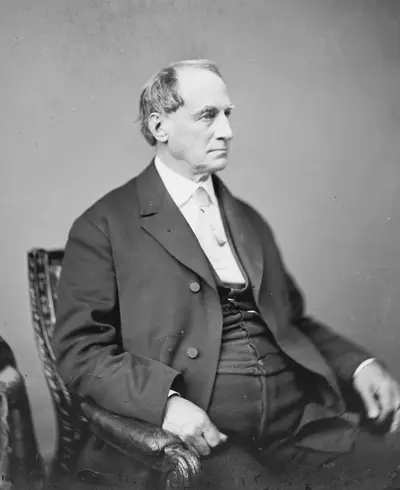
Caleb Cushing was an American Democratic politician and diplomat who served as a Congressman from Massachusetts and Attorney General under President Franklin Pierce. He was an eager proponent of territorial and commercial expansion, especially regarding the acquisition of Texas, Oregon and Cuba. He believed that enlarging the American sphere would fulfill "the great destiny reserved for this exemplar American Republic." Cushing secured the first American treaty with China, the Treaty of Wangxia of 1844; it gave American merchants trading rights in five Chinese ports. After the Civil War, Cushing negotiated a treaty with Colombia to give the United States a right-of-way for a trans-oceanic Canal. He helped obtain a favorable settlement of the Alabama Claims, and as the ambassador to Spain in 1870s defused the troublesome Virginius Affair.
