Pearl S. Buck Quotes
Men do not take good iron to make nails or good men to make soldiers.
Pearl S. Buck, 1892-1973, Nobel Laureate in Literature, The Young Revolutionist, 1932
Sourced by: Eigen's Political and Historical Quotations

The Shakers were an American religion and pacifists Lincoln learned. He was so impressed with their sincerity and way of life that he exempted Shaker men from the draft—the first conscientious objectors formally recognized in America. However, Lincoln made the statement to the Shakers which greatly impressed them and caused much reflection. Quakers had been pacifists also, but until the Civil War Draft there was no mechanism to test.

This quotation is a wonderful illustration of the change that has taken place in the American military. The young man who was not skilled enough for anything else was meant to be a soldier. By 2010 only one in four high school graduates would be skilled and intelligent to be qualified for the Untied States Navy. The other services also had high requirements in order to function with the high technology, of the modern military.


The poem was written for and inscribed upon a monument. The Atheists in Foxholes Monument was donated to Alabama Freethought Association, Inc. by the Freedom From Religion Foundation. It is located adjacent to the Willa Mae Whatley Auditorium, in Fearn Park at Lake Hypatia, Alabama.


Westmoreland’s critics point to this quotation as an illustration of exactly why he was the wrong man for the job. As Vietnam Supreme Commander, he controlled more firepower than any other military leader in history and yet he had “no room” for thought or reason much less mercy. Subsequent commanders of U. S. military efforts were much more sophisticated like, Colin Powell, Norman Schwarzkopf, and Wesley Clark who were leading American thinkers, sophisticated at political and military reasoning and very capable of mercy. The modern American military requires men and women who are skilled at thinking and reasoning.


Debs was jailed for sedition for this speech.

In contrast to the American army, there was no conscription in Canada. Note the quaint Canadian euphemism, "invited."


While Mangin was disgustingly racist, many native soldiers from Senegal, Morocco and other French colonies were pleased that Mangin was not only advocating that they serve with the French Army, but the General was critical of the fighting spirt of the then contemporary Frenchmen and claimed that the “prmitives” would invigorate the French Army. Mangin’s view was adopted as policy and in the First World War, native colonial troops were an important component of the victorious French Army.
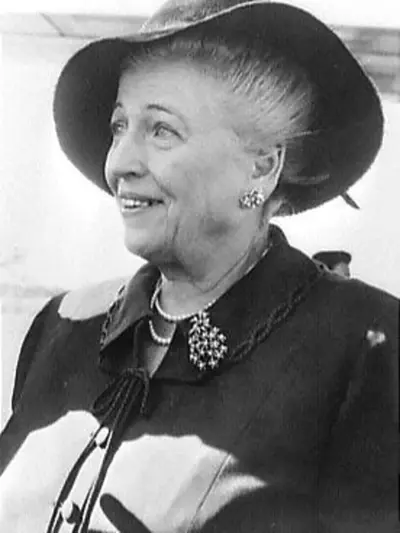
Pearl Sydenstricker Buck also known by her Chinese name Sai Zhenzhu (Chinese: 赛珍珠) was an American writer and novelist. As the daughter of missionaries, Buck spent most of her life before 1934 in Zhenjiang, China. Her novel The Good Earth was the best-selling fiction book in the United States in 1931 and 1932 and won the Pulitzer Prize in 1932. In 1938, she was awarded the Nobel Prize in Literature "for her rich and truly epic descriptions of peasant life in China and for her biographical masterpieces". She was the first American woman to win the Nobel Prize in Literature.
