Charles Dibdin Quotes
For a soldier I enlisted, to grow great in fame. And be shot at for sixpence a day.
Charles Dibdin, ~1745– 1814, English Writer & Poet, Letters, ~1774
Sourced by: Eigen's Political and Historical Quotations


The poem was written for and inscribed upon a monument. The Atheists in Foxholes Monument was donated to Alabama Freethought Association, Inc. by the Freedom From Religion Foundation. It is located adjacent to the Willa Mae Whatley Auditorium, in Fearn Park at Lake Hypatia, Alabama.


This quotation is a wonderful illustration of the change that has taken place in the American military. The young man who was not skilled enough for anything else was meant to be a soldier. By 2010 only one in four high school graduates would be skilled and intelligent to be qualified for the Untied States Navy. The other services also had high requirements in order to function with the high technology, of the modern military.


Webb’s opponent had accused him of not being patriotic because he opposed many of President George W. Bush’s Iraq War policies. This technique of publicly intimating that an opponent was not patriotic because he opposed the hawkish proposals of the President, had worked very well for the Republicans before. Presidential Candidate John Kerry, a decorated war hero, was attacked and remarkably Senator Max Cleland who had lost three of his four limbs in battle was unseated by attacking his patriotism. When Senator George Allen, fighting for reelection, used the technique on Webb, Web responded much more aggressively than earlier Democrats had when faced with the accusation. Senator Allen, like most of the patriotism critics of heroic veterans, had never been in combat.


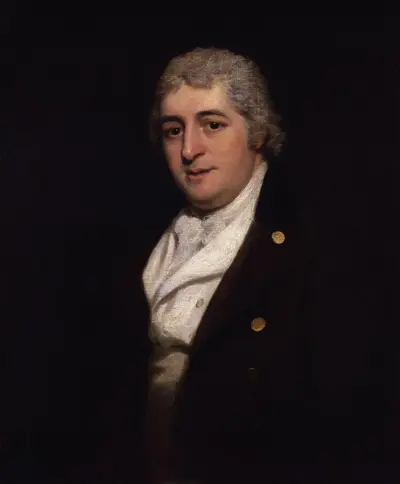
Charles Dibdin was an English composer, musician, dramatist, novelist and actor. With over 600 songs to his name, for many of which he wrote both the lyrics and the music and performed them himself, he was in his time the most prolific English singer-songwriter. He is best known as the composer of "Tom Bowling", one of his many sea songs, which often features at the Last Night of the Proms. He also wrote about 30 dramatic pieces, including the operas The Waterman (1774) and The Quaker (1775), and several novels, memoirs and histories.
